

Fly Fishing Lessons for Beginners
Fly fishing lessons for beginners are one of the best investments you could make for your journey as an angler. I'm talking about an investment with a qualified casting instructor—not the free lesson from someone trying to sell you gear! The sport is absolutely littered with anglers in the gray area of mediocrity who have spent a small fortune on equipment. Many of them shy away from lessons to improve their skills. It's stunning how many refuse to take lessons from professionals and try to go it alone. Fly fishing lessons for beginners
I've been enjoying the Winter Olympic games with the family in the evening because I love skiing events. How many athletes are competing with no coaching? If you're serious about wanting deeper enjoyment from fly fishing, then lessons could be for you!
I've participated in shows and conclaves since the early 1990s across the United States. The most common questions have repeated since that time, which tells me that many fly fishers need a nudge to jump to the next level. Questions like "I couldn't get a good float with all of those currents," "The wind made it impossible to get my line out," "Why does my fly keep falling off my leader?" and "The foliage made it impossible to cast."
Then there's the next level of folks still stuck at short distance roll casting and aerial casting who ask, "How do I get extra distance?" "Why does my leader keep getting knotted when I cast?" and "How can I learn better curves for fishing casts?" What if I told you that the very basic fundamentals of casting assist you in solving all of these problems?
It Is All About You
Just today on social media, the big-name-sponsored online media outlets really dumb things down. So much so that very little useful information is conveyed. A six-hundred-word article on how the George Harvey leader will enable you to catch lots more fish! There are no magic leaders, folks! Then another media source asks what the number one wet fly is for all of the United States. Really? And another asks for advice on the best indicator? Wow! No wonder so many fly fishers remain in the gray area of mediocrity.
I would argue that no single piece of equipment—like a leader or magic fly—is going to work miracles for you, the angler. It has always been the angler behind the rod who gets results. Got it? No magic fly, no magic rod, no magic leader, and none of the other nonsense prevalent today. Many think they'll get everything they need on YouTube and other online forums. While there are many good sites, how does a beginner determine what is good advice? Direct feedback from an experienced eye will take you much further in a short period of time.
I love teaching fly fishing lessons for beginners because it empowers them. They become advanced anglers in short order once they know what to practice. Beginners are the future of our sport. I would love to see women and children make up half of the fly fishers in America! This is the only way I foresee our sport moving in a positive direction. It's exciting as an instructor to watch how quickly new fly fishers improve in a single day!

Fly Fishing Lessons for Beginners: It's Called Fly Casting, Not Lobbing
What we see today is more lobbers with huge indicators than ever before across America. Many will choose an incremental increase in fly line weight to lob their bobber a few feet further. It actually regresses the sport in many ways because few are concerned with becoming better casters. Do you really need a high-end fly rod and fly line to lob your fly in the first place? Fly casting is what defines fly fishing in many ways. The evolution now is improving your skills! I believe it's the key to a direct increase in your efficiency while fishing. The more accurately you can fly cast with the intent of matching the water currents, the greater your results.
Water Types and Fisheries
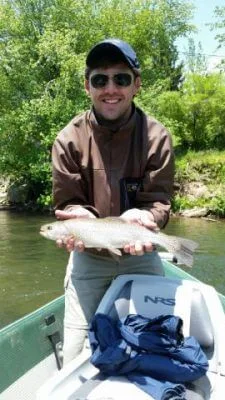
Another indicator of regression in my area is the number of folks choosing to fish on artificial waters. By artificial, I mean those heavily stocked with large pellet trout direct from the hatchery—not much different than pen-raised quail that you have to kick to make fly on the plantations in Georgia. Social media is full of selfies with usually planted fish. The reason many fly fishers in my region like to get out there is that there are 2,500 miles of wild trout water in my county alone. Now, it's all good for everyone, and I'm not passing judgment on what you choose to fish, especially in the beginner stages. What I am advocating is that once you're masterful with artificial scenarios, you move on to increase your skills in a wild setting. Wild fish tend to listen to their instincts more than freshly stocked trout. They will provide you with greater challenges overall, pushing you to the next level.