
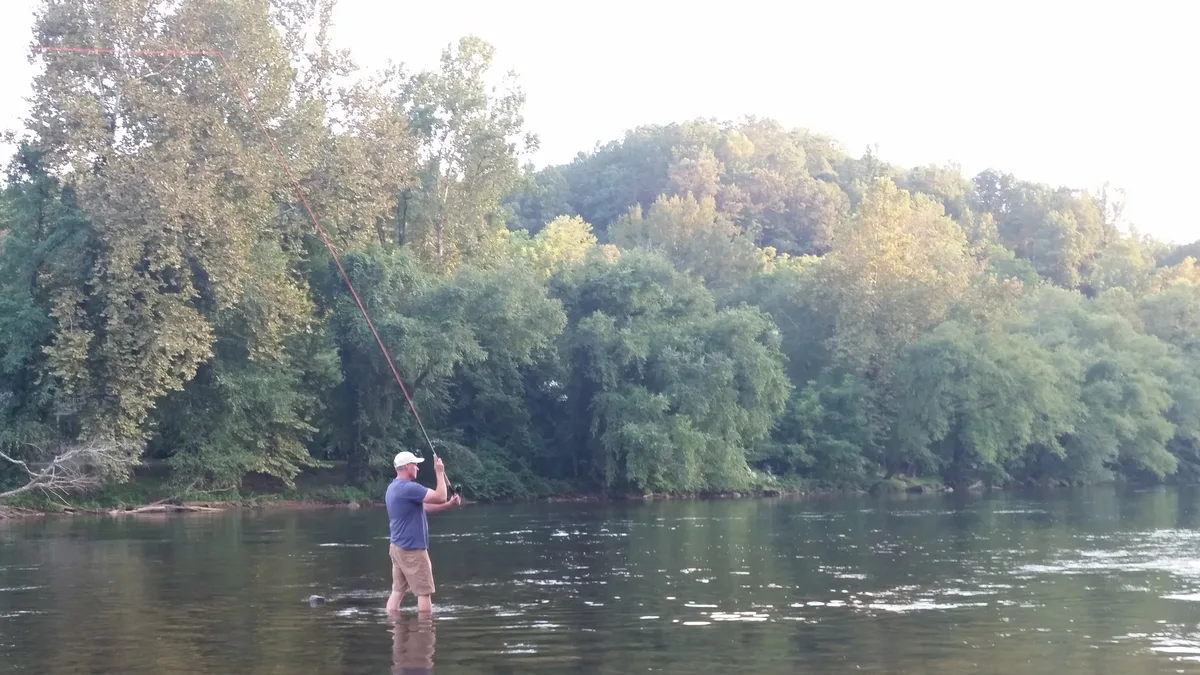
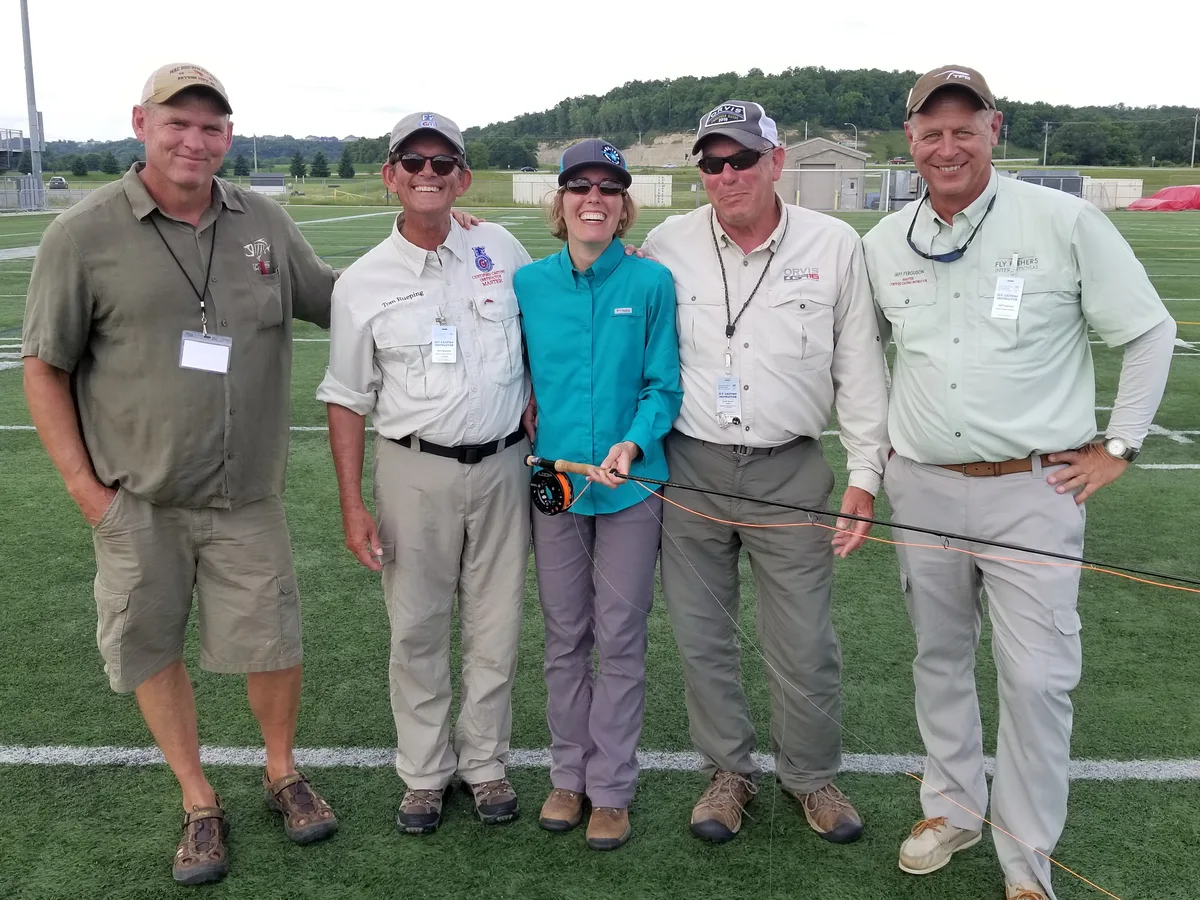
Over the course of my career, I've been genuinely blessed to fish and guide on some of the most beautiful water on earth. I've also watched thousands of anglers step into those same environments either fully prepared or completely caught off guard — and that gap between those two outcomes is something I've thought about for a long time.
Growing up, I played guitar, mandolin, fiddle, piano, and a handful of other stringed instruments. The most important lesson those instruments taught me — and it took a while to really see it — is that the place to grow a skill is to be exposed to sound fundamentals early, and then give those skills time to develop. You work through the moments they don't hold up. You let them improve through honest repetition. Fly fishing is exactly the same way. I've spent more than four decades teaching and guiding, and the pattern I see among anglers who truly thrive on destination trips is consistent: they've done the honest work before they left home.
It's More Than the Cast
Here's something that surprises a lot of anglers the first time they come through one of our schools: casting is only one of five components that determine whether a destination trip becomes a great story or a hard lesson. Every program we teach at Mac Brown Fly Fish covers all five — casting, line control, hook setting, playing fish, and landing fish — because they all have to work together.
A cast that drops the fly in exactly the right place means nothing if the hookset is a vertical wrist jerk. I have witnessed far too many vertical wrist hooksets in a teaching environment over the years, and let me tell you — that one takes real time for students to absorb and correct. It needs to be sorted out on your home water before the big trip. Not discovered on the bow of a high-dollar skiff with a permit in the grass.
The goal for every one of these five components is what I call automation mode: you aren't thinking about your double haul, you're just doing it. You aren't deliberating over the hookset — it fires correctly because the muscle memory is genuinely there. That's the level that makes a high-end destination trip everything you imagined it would be.
Skills Grow Through Repetition, Not Revelation
After more than 40 years of mentoring and coaching, the most important mindset shift I try to instill in every student is this: FAIL stands for First Attempt In Learning. The habits that hold people back in the learning phase are the very same ones that surface at the worst possible moment on a once-in-a-lifetime trip. Every time you work through a first attempt on your familiar home water — every time you shed one more habit that was holding you back — you replace it with something that holds up under real pressure. There are no shortcuts around this part of the process, and I say that with genuine warmth, because I've watched the shortcuts fail too many times.
I've also had hundreds of lessons over the years where the student mentions they're leaving for a high-end destination trip in a week or two. I appreciate the enthusiasm every time — but honestly, that's too soon for the techniques to have genuinely stuck. Intellectual knowledge and muscle memory are two completely different things. Give yourself enough time after a school to return to your home water, test what you learned, work through a few more failures, and absorb the correction before the big moment arrives. Six months to a year out is the honest answer.
The Schools That Build This Foundation
Rather than a one-and-done clinic, we've built an interconnected set of schools at Mac Brown Fly Fish — each one addressing a specific environment or skill set, and all of them reinforcing the same five-component system underneath. Here's an honest look at what each one does and who it's for.
Fly Casting Mastery Workshop
This is the starting point for almost every serious destination angler who comes through here. The Fly Casting Mastery Workshop covers the full mechanical picture over two days — loop control, tracking, hauling, presentation casts, and wind management. If your casting technique has untested gaps, this is where you find and close them in a productive, encouraging environment before they cost you on the water that matters. Lunches are included both days.
Saltwater Fly Casting Clinic
If your destination involves a skiff, a tarpon, a permit, or a bonefish guide calling clock positions in a crosswind, the Saltwater Fly Casting Clinic is the school I'd point you to first. We cover the full saltwater package — heavy line weights, picking up and delivering accurately in under three seconds, the distance double-haul, and managing the kind of coastal wind that breaks unprepared anglers on day one. All five components get worked in this school. Lunches included.
Spey Elite Casting Clinic
Heading for steelhead water in the Pacific Northwest? Atlantic salmon rivers in Canada or Iceland? Sea-run browns in Patagonia? The Spey Elite Casting Clinic gets your two-hand mechanics, anchor work, and fluid dynamics sorted before you arrive. Spey casting has enough moving parts that trying to figure it out on a trip that costs what those trips cost is a real gamble. Lunches included.
Mountain Trout and Technical Water
For anglers heading to demanding trout destinations — spring creeks and backcountry rivers of the West, New Zealand's sight-fishing rivers, or the wild mountain streams of the Southern Appalachians — our Smoky Mountain Weekend Schools offer focused on-water immersion in Great Smoky Mountains National Park. Each clinic runs two full days with lunches included, and each one reinforces all five components of the system:
- Comprehensive Dry Fly Clinic — presentation, drag management, leader design, and reading rise forms on technical water
- Nymph Fishing Clinic — tight-line Euro techniques, indicator nymphing, and depth control in varying currents
- Streamer Fishing Clinic — articulated patterns, line control, and the hookset on the aggressive takes that big fish give you exactly once
- Wet Fly Clinic — swing technique, line control, and reading the drift across different current speeds
Any one of these adds a targeted skill layer on top of a solid casting foundation. Stack two or three ahead of a serious destination trip and you arrive a fundamentally different angler than when you started.
The Full Immersion: Fly Fishing Guide School
For the angler who wants to go truly deep before a high-end trip — or who wants the kind of understanding that would otherwise take years of self-guided fishing to develop — the Fly Fishing Guide School is a four-day intensive covering casting, reading water, presentation strategy, fish biology, entomology, rigging, safety, and the complete problem-solving approach of a working guide. Many destination anglers attend not to become guides, but because four days of this curriculum changes how they see and fish every piece of water for the rest of their life. Lunches are included across all four days. You can also learn more at our dedicated school site, flyfishingguideschool.com.
One More Piece of Honest Advice
The anglers who get the most out of their destination trips — the ones who come back with the stories — are almost always the ones who arrived prepared. Not just gear-prepared. Skills-prepared. They knew their cast would hold up in wind. Their hookset fired correctly under pressure. They knew how to fight and land a fish without blowing it at the net.
If you're not sure where to start, reach out. Matching the right school to the right destination is something I genuinely enjoy helping people think through. I've had that conversation with anglers planning trips all over the world, and it's one of my favorite conversations to have. The investment you make in skill development before the trip is almost always the best investment you make in the trip itself.