

Learn to Catch Trout Fly Fishing Lakes, Stillwaters, Ponds, and Lochs in the Smoky Mountains of North Carolina
Learn to catch trout fly fishing lakes, stillwaters, ponds, and lochs in the Smoky Mountains of North Carolina! Mac Brown Fly Fish offers many choices on local lakes near Bryson City, NC. These include Bear Lake, Wolf Lake, Tanasee Lake, Cheoah Lake, Calderwood Lake, Fontana Lake, and Nantahala Lake, among the most popular impoundments in the region. All of these impoundments are high mountain lakes in the Smoky Mountains! Dories tend to be the boat of choice for fly fishing the local lakes.
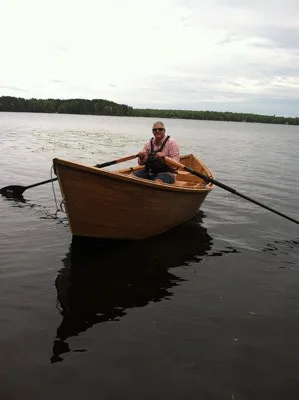
Woody Woodruff with His Crafted Wooden Dory
Mac Brown specializes in teaching traditional methods of loch-style angling for trout. You will learn how to read the water, rigging and knots for droppers, fly casting, line retrievals, hooking and playing fish, and understanding the many fly line choices used in lake fly fishing. The rewards are plentiful when fly fishing lakes in western North Carolina because the fish are much bigger than river trout! Learning to catch trout in lakes, stillwaters, ponds, and lochs took me a while to appreciate, but the many challenges make it worthwhile. Josh Stephens brought back several books from the World Championships in Scotland in 2009 and explained to me the complexities of stillwater fly fishing. It is one of my favorite pastimes now because the rewards are tremendous!
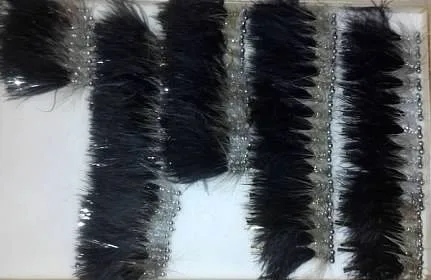
Humongous Lake Fly Patterns Created By David Downie, Glasgow, Scotland
The Fly Rod for Lake Fly Fishing
The fly rod setup usually includes a seven-weight rod with a minimum length of ten feet. Lake fishing requires longer fly casts than you typically use when fly fishing on a river. The longer rod requires less effort to achieve a long fly cast with ease. The trend in the United States has kept most rods at nine-foot lengths from rod manufacturers, but this is evolving. Over the past decade, more companies have been offering longer fly rods.
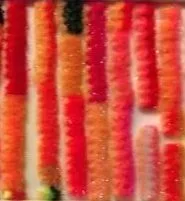
Blob Patterns for Attraction
Fly Line Choices for Lake Fishing Trout
The fly line choices available for fly fishing lakes and ponds are numerous! We provide midge tips, glass lines, sweep lines, floating lines, and sinking lines with densities that range from type 1 through type 14. The line type density determines how quickly the line will sink. Lake fly line choices are definitely more complex than when going trout fishing on a river! Learning to catch trout in lakes, stillwaters, ponds, and lochs becomes very addicting once you begin to appreciate the rewards and complexities.
Learn to Catch Trout Fly Fishing Lakes, Stillwaters, Ponds, and Lochs
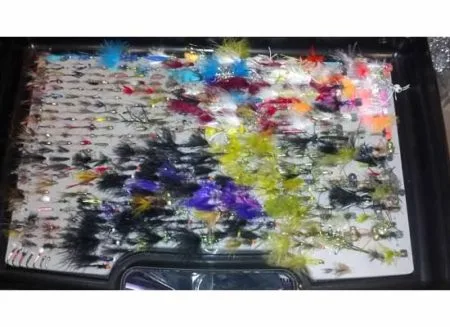
Typical Lake Fly Fishing Patterns for Trout in North Carolina
The retrieval rate in lake fly fishing is what separates really good loch-style anglers. North Carolina has been fortunate in hosting many Fly Fishing Team USA Youth practices over the past decade right here in Bryson City, NC, including training clinics with elite loch-style anglers from the U.K. John Horsey from England and David Downie from Scotland both made huge contributions to raising the bar by sharing their knowledge of loch-style angling techniques.
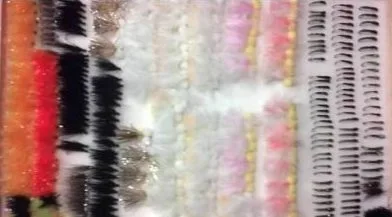
Fly Patterns for Lake Fishing for Trout in North Carolina
The patterns for lake fly fishing are quite different from typical river flies. We tie mostly blobs, boobies, lures, and wets for all of our guided lake fly fishing excursions. Lures include patterns such as the Humongous and Woolly-Buggers, among many others. Most patterns are usually tied on a size 10 hook. The boobies have foam eyes and float, which allows for unique presentations where the fly line sits beneath the pattern. This is a very productive method when fishing over grass flats for trout. My favorite patterns to tie during the winter months are traditional wet flies from the United Kingdom. The color combinations have been around for hundreds of years.
My friend Davy Wotton in Arkansas is a master wet fly tier and angler for loch-style and river fly fishing. He has many great patterns available on this site. Also, check out Davy McPhail and Paul Caslin for wet fly tying patterns.
Fly Fishing Rigging for Lakes
Standard lake fishing rigging uses three flies on the leader, a configuration referred to as the "cast" of flies. The "bob" fly refers to the top dropper closest to the rod. The "point fly" is the pattern tied on the end furthest from the fly rod. The dropper in the middle of the setup is called the middle dropper. Dropper tags measure approximately one foot in length and are usually spaced 5–6 feet apart. The overall leader length is usually around 18–20 feet. The monofilament is usually 8–10 pounds in breaking strength. I prefer Maxima fluorocarbon in 3x most of the time.