
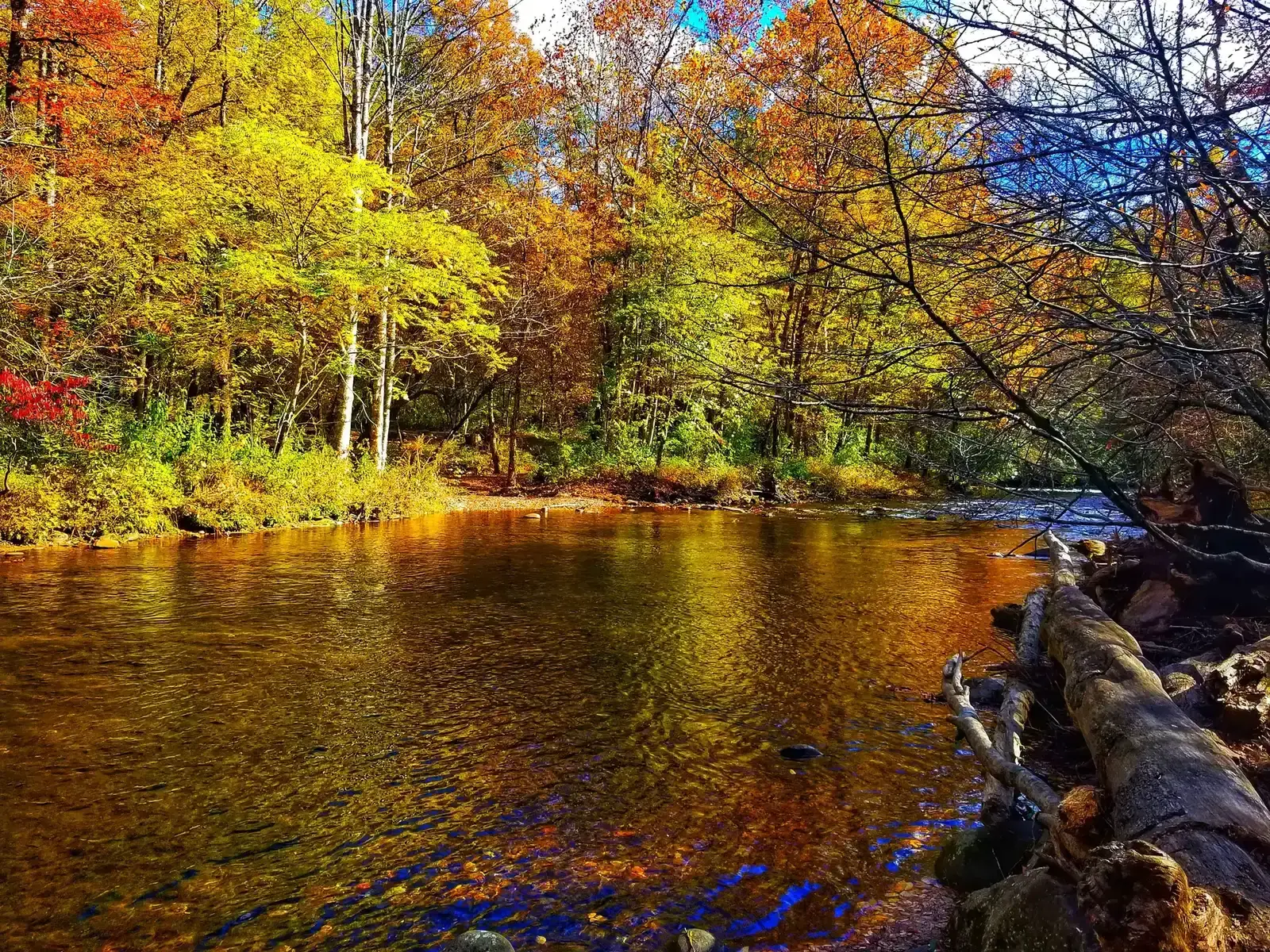
Smoky Mountains · Bryson City, North Carolina · Since 1987
Dry Fly Fishing Schools & Surface Presentation Instruction
Mac Brown Fly Fish offers dry fly fishing schools and surface presentation instruction in Bryson City, North Carolina — taught by our credentialed instructor team, which includes FFI Master Casting Instructors. Instructors vary by session. Mac Brown is the recipient of the FFI Lifetime Achievement Award and the only FFI Master Casting Instructor in North Carolina. He has taught on these waters since 1987. Learn to match the hatch, read rising trout, and achieve drag-free drifts on wild Smoky Mountain streams. Private sessions for all skill levels — complete beginners through technical anglers preparing for selective, demanding water. Classes are taught by our team of credentialed instructors, which includes 2026 World Fly Fishing Champion Michael Bradley. Instructors vary by session.
The rise. The presentation. The eat.
Choose Your Path
Fork in the River
Path A
1-on-1 Instructional Guided Trip
Perfect if you want dedicated dry fly coaching on wild mountain streams — tailored completely to your pace, your goals, and what the fish are doing that day. Wade the Tuckasegee or fish the park streams with Mac reading the water and explaining what he sees as you go.
- 1 or 2 anglers, same rate
- Half day or full day
- All gear provided
- Hands-on coaching on active trout water
Path B — Multi-Day Immersion
Dry Fly Weekend Clinic
Our dedicated dry fly clinic — a full weekend focused entirely on surface presentation: matching the hatch, reading rises, drag-free drift, and the casts that make it all work. Deep mechanics, real water, real fish. Education, not entertainment.
- Multi-day intensive format
- Casting and on-water instruction combined
- Small group, expert coaching
- Skills that hold — not tips that fade
Dry fly fishing is the most visible, most satisfying, and most humbling branch of the sport. You can see the fish. You can see the fly. You can see the refusal. There is nowhere to hide — and that transparency is exactly what makes it so compelling to get right. When a wild trout rises confidently and takes your fly from the surface, that moment does not repeat itself.
The challenge is genuine: rising trout are often feeding selectively on a specific insect at a specific stage. The drift has to be right — not almost right, but actually right — across currents pulling your line at three different speeds. The presentation has to land soft enough not to spook a fish that has been sitting in clear water watching everything that passes overhead.
These are learnable skills. The key is instruction from someone who has been fishing this water and watching students learn since 1987 — and who has spent that time building plain language for complex things, one concept at a time, until it actually sticks.
"The most consistent dry fly anglers I know are not the most talented — they are the ones who understand exactly what they are doing and why. That understanding is what this instruction builds."
What You Learn
Dry Fly Curriculum
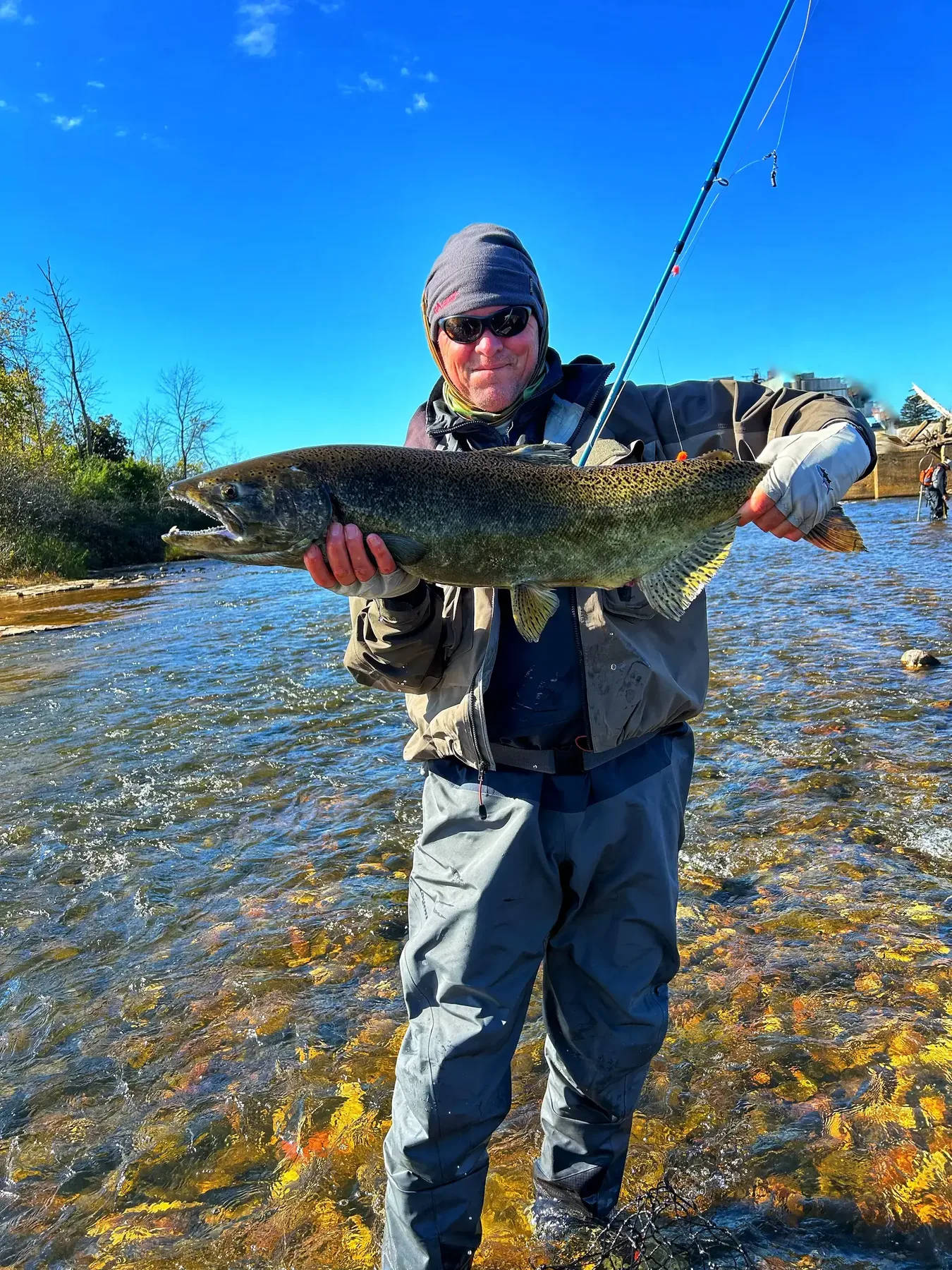
How Mac Teaches
Mac teaches by feel before he teaches by name. Before a cast has a label — reach cast, curve cast, parachute mend — you feel it working in your hand. The rod tracks correctly, the line lays down in the right shape, the fly lands where it needs to land. The name comes after, anchored to something you have already experienced.
After nearly four decades of watching students fish dry flies, Mac has developed plain language for each piece of the puzzle. No jargon. No rigid stance requirements. No formulas. He tells you what he sees and explains it in terms of what you can see and feel — and then the river does the teaching while he watches and adjusts.
- Feel-first — you experience it before you label it
- Plain language for complex concepts — no jargon, no confusion
- Real water, real fish — every concept taught in context, not on a lawn
- Immediate, specific feedback — not general encouragement
- Drills that hold between sessions — improvement that stays with you
On Our Instructor Team
Michael Bradley — 2026 World Fly Fishing Champion. Individual gold at the 2026 FIPS-Mouche World Fly Fishing Championship and a Fly Fishing Team USA angler from Cherokee, NC.
Instructors vary by session.
Questions
Frequently Asked Questions
Who teaches the dry fly school?
Mac Brown — recipient of the FFI Lifetime Achievement Award (2023) and the only FFI Master Casting Instructor in North Carolina, the highest casting designation in the sport. Mac has been teaching fly fishing in Bryson City since 1987 and has presented nationally at The Fly Fishing Show since 1994. Nearly four decades of watching students fish, developing the language and the drills that make dry fly presentation finally click.
Do I need to be an experienced fly fisher to take dry fly instruction?
No. We teach you how to see the fish eat the bug from square one — reading the surface, identifying the rise form, selecting the fly, presenting it correctly, and detecting the take. If you have basic casting ability, you are ready. If you are unsure about your casting, a combined casting-and-dry-fly session is the right starting point.
What is 'matching the hatch' and do I need to know entomology?
Matching the hatch means presenting the fly the trout are actually eating at that moment — the right size, shape, and color. You do not need to memorize Latin names. Mac teaches you to read what is happening on the water, identify the key insect by sight and behavior, and select from a manageable range of patterns that cover the most important hatches on Western NC streams.
What is a drag-free drift and why does it matter so much?
A drag-free drift is when your fly floats naturally on the current at the same speed as the real insects — without being pulled unnaturally by your fly line. Fish feeding selectively at the surface will refuse a fly moving differently from everything else around it. Achieving a drag-free drift across conflicting current seams is the central challenge of dry fly fishing, and the primary focus of this instruction.
What fish will I encounter on dry fly water?
Wild rainbow trout and brown trout throughout the Tuckasegee River and GSMNP streams. Native brook trout at higher-elevation park water — one of the most beautiful and increasingly rare trout in eastern North America. Wild fish that have not been conditioned by hatchery feeding are far more selective than stocked fish, which makes reading their rise forms and matching their food genuinely rewarding when you get it right.
What waters do dry fly schools fish?
Instruction takes place on the Tuckasegee River in Bryson City and wild streams of Great Smoky Mountains National Park. The park streams are exceptional dry fly water — clear, wild, and full of classic riffle-pool-run structure that rewards precise surface presentation. Spring and fall are the most productive dry fly seasons, though surface fishing is good throughout the year on the right water.
Do I need my own gear?
Absolutely not. All gear is provided — matched to the presentation style of the day. You are welcome to bring your own rod if you prefer, especially if you want instruction tailored to your specific setup.
Is a fishing license required?
Yes — a valid North Carolina Inland Fishing License (in-state or out-of-state) is required for all anglers 16 and older. For the Tuckasegee River between October and the end of May, out-of-state visitors may also use the Mountain Heritage Trout Waters Day License as a less expensive alternative — it is not required, just an option. Purchase at ncwildlife.org or any local sporting goods store in Bryson City.
Who teaches this class?
Classes are taught by the Mac Brown Fly Fish instructor team, working from the curriculum Mac Brown has developed since 1987. The team includes Michael Bradley, individual gold medalist at the 2026 FIPS-Mouche World Fly Fishing Championship and a Fly Fishing Team USA angler from Cherokee, NC. Instructors vary by session — ask when you book if you'd like to know who is teaching your dates.
Location & Logistics
Bryson City, North Carolina
Mac Brown Fly Fish is based in Bryson City, NC — the gateway to some of the finest wild trout water in the East. Dry fly instruction takes place on the Tuckasegee River and wild streams of Great Smoky Mountains National Park.
- All gear provided
- Wild Smoky Mountain streams and Tuckasegee River
- Sessions available year-round
- 1–2 students per session, same rate
- Online video coaching available worldwide
Ready to Fish Dry Flies?
Book Your Session
Private, tailored instruction on wild Smoky Mountain trout water. All gear provided. All skill levels welcome.