

Smoky Mountains · Bryson City, North Carolina · Since 1987
Advanced Nymph Fishing Schools & Tactical Instruction
Mac Brown Fly Fish offers nymph fishing schools and tactical subsurface instruction in Bryson City, North Carolina — taught by our credentialed instructor team, which includes FFI Master Casting Instructors. Instructors vary by session. Mac Brown is a Southern Fly Fishing Hall of Fame inductee and the only FFI Master Casting Instructor in North Carolina. He has taught on these waters since 1987. Trout eat 90% of their food underwater. Master tight-line nymphing, high-sticking, European technique, and indicator methods on wild Smoky Mountain streams. Private sessions for all skill levels — complete beginners through experienced nymph anglers targeting specific tactical improvements. Classes are taught by our team of credentialed instructors, which includes 2026 World Fly Fishing Champion Michael Bradley. Instructors vary by session.
Fish where the fish actually are.
Choose Your Path
Fork in the River
Path A
1-on-1 Instructional Guided Trip
Custom nymph coaching on wild Smoky Mountain streams or the Tuckasegee — 1-on-1 or 2-angler, tailored to your pace. Mac reads the water, identifies the holding structure, and coaches you through the nymph presentation in real time as you fish together.
- 1 or 2 anglers, same rate
- Half day or full day
- All gear provided
- Real-time coaching on active, productive water
Path B — Multi-Day Immersion
Nymph Fishing Weekend Clinic
Our dedicated nymph clinic — a full weekend immersed in every layer of the subsurface game: tight-line, indicator, reading water, fly selection, and strike detection. Structured progression across two full days of casting and on-water instruction.
- Multi-day intensive format
- Both tight-line and indicator systems
- Small group, expert coaching
- The complete nymph toolkit in one weekend
Trout eat 90% of their food underwater. On most rivers, on most days, the fish actively rising to the surface represent a small fraction of the trout that are actively feeding. The rest are holding near the bottom, in the current seams, in the pockets behind rocks — eating nymphs and larvae as they drift past. Nymphing is how you reach those fish.
It is also one of the most tactically rewarding forms of fly fishing. Reading the water, selecting the right fly and weight, managing the drift at the right depth, detecting the take before the fish spits the hook — each piece of the system requires understanding and attention. When all of it comes together, the result is a level of consistency on the water that dry fly fishing alone cannot deliver.
Mac Brown has been teaching tight-line, high-stick, and indicator nymphing on Smoky Mountain freestone streams since 1987. He knows this water, he knows the fish, and he has spent four decades developing the language that makes complex nymph technique learnable in a single day on the water.
"Once you understand what the fish are doing underneath the surface and how the nymph needs to behave to imitate it, the whole system becomes logical. That is the goal — making you a more logical angler."
What You Learn
Nymph Fishing Curriculum
How Mac Teaches
Nymph fishing has more moving parts than any other fly fishing technique — depth, drift speed, strike detection, fly selection, reading structure, managing the leader. Mac teaches it in layers, not all at once. You start with the piece you need most, get it working, and then add the next layer on top of something you already understand.
After four decades of watching students nymph fish, Mac knows exactly which piece of the system most anglers are missing. He tells you what it is, shows you the correction, and stays with you until it holds — not until you nod, but until you can actually do it without thinking about it.
- Layer-by-layer instruction — one piece at a time, built on what you already have
- Water reading before the cast — identify the structure before choosing the rig
- Both tight-line and indicator systems — the right tool for the water in front of you
- Strike detection as a skill — not just watching, but anticipating
- Specific corrections, held until they stick — no vague encouragement
On Our Instructor Team
Michael Bradley — 2026 World Fly Fishing Champion. Individual gold at the 2026 FIPS-Mouche World Fly Fishing Championship and a Fly Fishing Team USA angler from Cherokee, NC.
Instructors vary by session.
Questions
Frequently Asked Questions
Who teaches the nymph fishing school?
Mac Brown — Southern Fly Fishing Hall of Fame inductee (2017), recipient of the Mel Krieger Casting Instructor Award (2021), and the only FFI Master Casting Instructor in North Carolina. Mac has been guiding and teaching nymph fishing on Smoky Mountain streams since 1987, with over four decades developing the teaching approach that produces real, measurable improvement on the water — not just a new set of ideas to carry home.
Why choose nymphing over dry fly or wet fly fishing?
Because trout eat 90% of their food underwater. On any given day, the number of fish actively rising to the surface is a small fraction of the fish that are feeding. Nymphing puts your fly where the fish actually are — in the water column, near the bottom, where nymphs, larvae, and subsurface food items are constantly drifting past. Mastering nymphing does not mean ignoring dry flies. It means being able to catch fish all day instead of only during the brief windows when fish are rising.
What is the difference between tight-line nymphing and indicator nymphing?
Tight-line (or European-style) nymphing uses no indicator — the angler maintains direct contact between the rod tip and the flies, feeling every tick, bump, and hesitation in the drift. It is extremely sensitive and effective in fast, broken water. Indicator nymphing suspends a float on the leader to signal strikes, which makes depth control more precise in slower, deeper water. Both methods have their place, and Mac teaches both — the goal is knowing which system fits the water in front of you.
What is high-stick nymphing?
High-sticking is a tight-line nymphing technique where the rod is held high to lift as much fly line off the water as possible, reducing drag and maintaining direct contact with the flies. It is one of the most effective methods for pocket water and fast freestone streams — exactly the kind of water found throughout the Smokies. It requires understanding current reading and drift management, which is covered in depth during instruction.
Do I need experience before taking nymph instruction?
No experience required. Beginners learn nymphing from the ground up — which is actually a significant advantage, since you are not unlearning habits that work against you. Experienced nymph fishers who have hit a ceiling in their results often find that a single session identifies the specific gap — strike detection, depth control, fly selection — that is quietly costing them fish every time they are on the water.
What waters do nymph fishing schools fish?
Nymph instruction takes place on the Tuckasegee River and wild streams of Great Smoky Mountains National Park. The park streams are exceptional nymph water — fast, clear freestone streams full of wild rainbow trout, brown trout, and native brook trout at higher elevations. The Tuckasegee provides broader, more varied water ideal for learning indicator nymphing and reading different types of holding structure.
Do I need my own gear?
Absolutely not. All gear is provided, including European-style nymphing setups and traditional indicator rigs. You are welcome to bring your own rod if you prefer, especially if you want instruction specific to your setup.
Is a fishing license required?
Yes — a valid North Carolina Inland Fishing License (in-state or out-of-state) is required for all anglers 16 and older. For the Tuckasegee River between October and the end of May, out-of-state visitors may also use the Mountain Heritage Trout Waters Day License as a less expensive alternative — not required, just an option. Purchase at ncwildlife.org or any local sporting goods store in Bryson City.
Who teaches this class?
Classes are taught by the Mac Brown Fly Fish instructor team, working from the curriculum Mac Brown has developed since 1987. The team includes Michael Bradley, individual gold medalist at the 2026 FIPS-Mouche World Fly Fishing Championship and a Fly Fishing Team USA angler from Cherokee, NC. Instructors vary by session — ask when you book if you'd like to know who is teaching your dates.
Location & Logistics
Bryson City, North Carolina
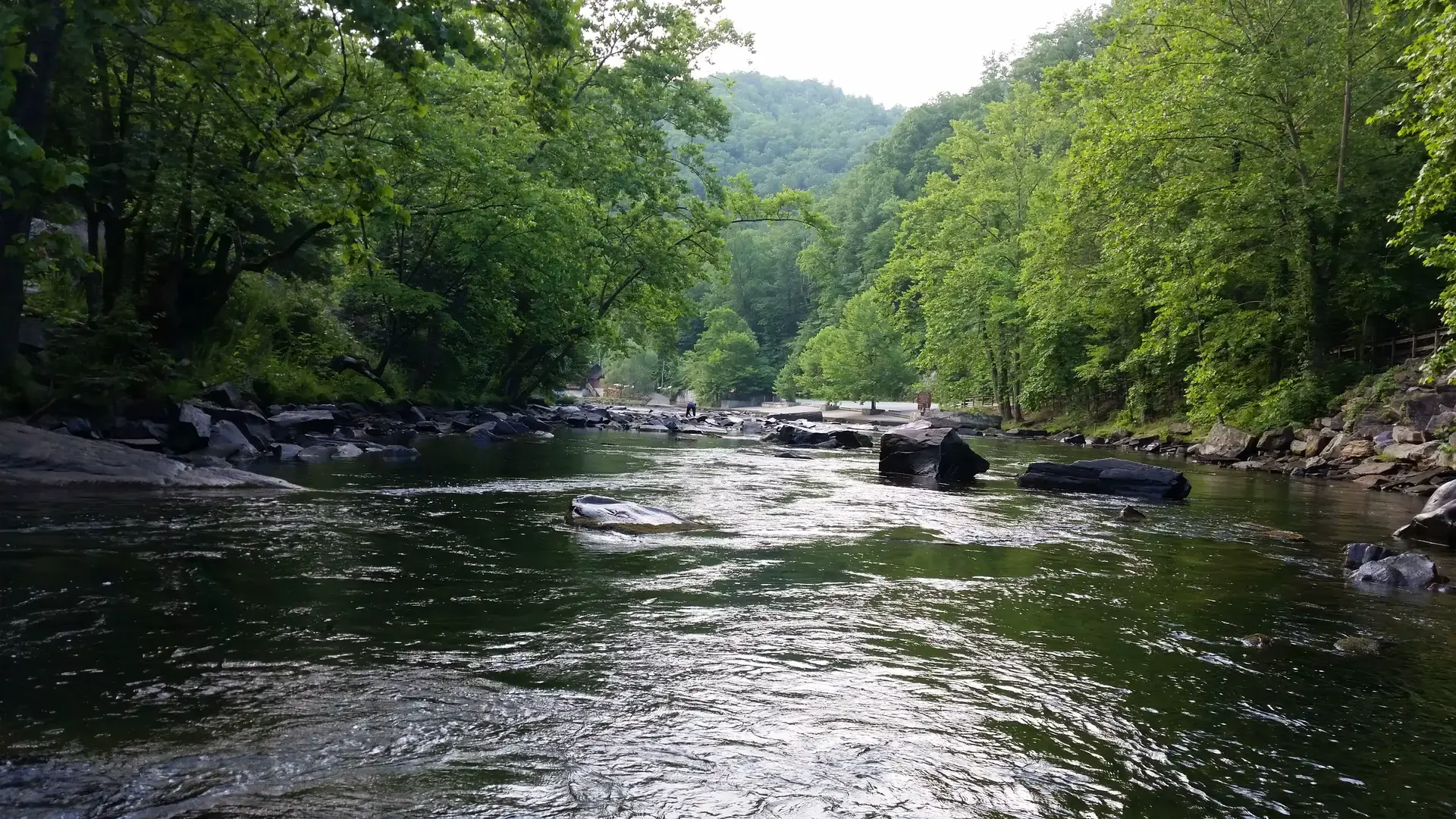
Mac Brown Fly Fish is based in Bryson City, NC. Nymph instruction takes place on the Tuckasegee River and wild freestone streams of Great Smoky Mountains National Park — some of the finest pocket water and nymph fishing in the eastern United States.
- All gear provided
- Tight-line and indicator nymph rigs included
- Tuckasegee River and GSMNP streams
- Sessions available year-round
- 1–2 students per session, same rate
Ready to Fish Deeper?
Book Your Session
Private, tailored nymph instruction on wild Smoky Mountain trout water. All gear and rigs provided. All skill levels welcome.