

.Creel Study for Upper Nantahala River
The North Carolina Wildlife Resource Commission (NCWRC) conducted a creel study on the Upper Nantahala River in October 1993. The study yielded some very interesting results that illustrate why instruction is such a necessity for anglers who wish to improve. The Delayed Harvest section of the Upper Nantahala is located about 30 minutes from Bryson City, NC.
Bryson City, NC is nestled in the Great Smoky Mountains and is the trout mecca for the region. The NCWRC maintained catch ratios through personal surveys, and the results were astounding! Similar studies conducted by fish and wildlife agencies in other states have concluded very similar results.

Donut Pie Chart Illustrates 2.6% (Outer Ring) Catches Over 1/3 Total Numbers (Inner Ring)
Creel Survey Data
The study illustrates that 0.003% of those surveyed caught 12.4 trout per hour (TPH), while the other 99.007% caught an average of 0.81 TPH. The top 2.6% of anglers surveyed caught 8 TPH, while the rest of the group averaged one fish every 76 minutes.
In other words, the top 2.6% land a trout every 7 minutes, while others wait 76 minutes between hookups. Keep in mind that this study was conducted during the off-season for trout growth in this region—just imagine what the results could be in springtime! The most fascinating part of this study reveals that the top 2.6% of all anglers surveyed caught over a third of the total trout landed during the eight-week study.
Fly Fishing Lessons & Instruction
This study is not intended to discourage anglers. There are steps involved in becoming more successful over time. These types of studies are beneficial because they reveal where improvements can be made. How many similar studies have you read recently? It's rare indeed, because the allure of angling is always to believe you'll be successful on every cast if only you had that new rod, that "magic fly," or whatever "hot tip" the media offers. creel study upper nantahala
Optimism is an essential ingredient for the successful angler, but there are stages of progression one must be willing to undertake to reach a level of consistent results. American society's focus on instant gratification means few are willing to work for perfection.
Fly fishing is an art form that takes many years to master and achieve consistent results. It requires fishing often in many different environments and conditions. A basic understanding of casting mechanics will open up huge gains for solving problems as they arise on the stream.
Many anglers get tired of fishing wild trout waters simply because they tend to be more challenging than hatchery fish. This is no doubt why Delayed Harvest and privately stocked waters tend to be so popular.
Trout Fishing is Problem Solving
When anglers fish wild waters, they often criticize the fishery. We all hear comments like "the baiters have cleaned it out," "someone fished in front of me," or "if only I had that new submarine-technology rod" or "that magic fly." The list of excuses can grow quickly! These anglers often spend their time on hatchery-supported water, heavily stocked private waters, or other non-challenging waters.
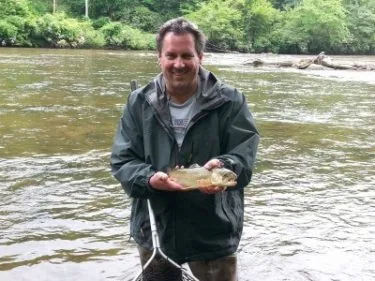
These types of waters provide excellent learning curves for beginner anglers because trout tend to cooperate. As your skill level progresses, you should seek more remote and wild waters. It takes serious commitment for anglers of all skill levels to "push the envelope" and reach the next level. This means learning fundamentals properly from the start, practicing these fundamentals on land until you're confident in your abilities, fishing many different types of waters, and fishing often enough to fine-tune your skills. creel study upper nantahala
Is There Pixie Dust in Trout Fishing?
Chasing the delusions of magical "honey holes," pixie dust, and that special unique fly you threw into a tree will rarely improve your skills. These are simply excuses for folks very new to the sport. Fly fishing for trout at a high level requires serious work on the stream. There is no substitute for hard work and your personal journey. We are blessed to spend so many days every year on great water.
We want to teach anglers who wish to learn this art form and are not satisfied with dabbling in mediocrity. Those anglers will fish the same way their entire lives with little to no improvement. What I really enjoyed about the NCWRC study is that it helps prove what we've known for years: a small percentage of anglers catch most of the trout!
Keys to Increasing Your Trout Fishing Skills
Is it simply luck that the top 2.6% of the angling community always seem to have high catch ratios on every outing? These elite few anglers do well consistently because they have learned the keys to increasing their trout fishing skills. The majority of anglers could benefit greatly from improvement in water reading and developing the ability to control the rod to better manage the entire drift. Sure, there are numerous other important considerations, but the point is that 90% or more of the angling community could significantly improve their casting and water reading abilities.
Long drag-free floats in productive feed lanes rarely happen by accident. Repetition of applying fundamentals in a logical manner increases learning. Everything on the water basically boils down to your efficiency in reading water, casting skills, line control, stealth tactics, fly selection, and your cumulative knowledge of how water and trout behave.
A few basic fundamentals can increase an angler's float time by as much as 600%. Dragging fly patterns actually spook older, more experienced fish—the really big ones. Excessive false casting is a sure way to spook trout. It's also simple statistics: if your fly is in the air most of the day, how can you expect to land many trout? False casting should be one backcast followed by delivery each time on the water. This requires understanding the dynamics of the cast.
Learn to Get a Drag-Free Drift!
Learn to achieve a long drag-free float through the entire feed lane before you cast again. Very few anglers have this ability simply because they never developed it. You can master this much more quickly by first learning a few basic principles of moving water. Second, gain control over your cast so that you rarely cast straight. Mastering the cast means learning angles and developing the ability to alter your cast.
The majority of the time, we use 90-degree angles more than straight-line casts because they get results! This improvement translates to more trout hooked and landed—as opposed to catching a few fish, spooking many others, and ending the day with a sore arm from overworking the cast.
A day of private instruction with a professional guide can transform your basic skills. It's the best money you'll spend on the sport! Many anglers show up expecting the destination and miss the journey entirely—what fly fishing is really about. In my opinion, that's what most people seem to miss about this great sport. A good day varies from angler to angler, but it's always measured by the number of fish landed.
Fly Fishing Lessons and Instruction
There are literally hundreds of programs that offer fly fishing lessons and instruction. Good instruction means you leave knowing what skills to improve. Most guides tie knots, make lunch, and row a boat—but how does this improve you for the next time you're on the river?
Many guides haven't mastered achieving a drag-free drift themselves, so how can they teach others? Most traditional programs teach straight-line casting, reach casts, and basic mends. This falls far short of what's necessary to master great presentations. A great instructor must have both the ability and a method to convey these concepts in a logical manner.
Quality Instruction Is the Best Investment
Seek out quality instruction for your journey. A guide might describe the exact location for you to cast and tell you when to strike. They may offer tips on playing and landing fish and much more.
A good instructor should be able to demonstrate your mistake and suggest the correct fix, provide you with a solid fly casting foundation, and teach numerous other important concepts for mastering better presentations.
If you've never learned the "art of angles," a quality lesson from an experienced instructor is a wise choice. There are many misconceptions surrounding this wonderful sport. The successful angler learns to understand the quarry thoroughly and develops predator-like skills. Your equipment will let you perform at your best once you understand how to use it properly. Do you wish to learn the art of fly fishing with techniques that get consistent results? We love to teach the skills that will transform your journey in this great sport of fly fishing.