

Understanding the Fly Fishers Triad
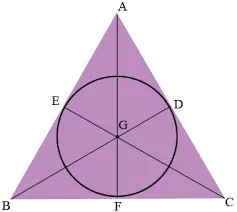
Understanding the fly fishers triad offers a methodology to guide your progress as a fly fisher. It has been an ongoing book project for over a decade, focused on establishing a path for fly fishers to progress. This parsimonious concept brings it all together beautifully for all levels of anglers. The triad is based on an equilateral triangle in an ideal world. In reality, every angler's triangle becomes unique with a different shape. The three sides encompass strategy, line control, and tactics. These lead to other triads that build off the original, much like a live oak tree with multiple branches stemming from three main branches. The main tree trunk encompasses all things fly fishing.
All three are equally important and will require dedication to apply them for any real progress. If you view these attributes of the triad as a whole, you'll be well on your way to mastery as a fly fisher. Many studies in the industry show that over 60% of fly fishers fish fewer than a few days annually. This group would really benefit from having a mentor who establishes a triad path for their journey, because it is a fabulous sport.
Strategy
Strategy will take the most work to develop if you learn it through trial and error. Each visit to the stream offers valuable lessons if you pay attention to the details. Minuscule details often provide the clues you need for success. Your strategy also influences how you choose to fish the water you're presented with in the moment. Do you camp out on the honey hole and never leave? Do you rest it wisely? This list can get long in a hurry.
Fly fishers with experience tend to have the best strategies. They apply their accumulated knowledge because they have more of it. The triad of strategy consists of knowledge, wisdom, and intent. These also have other triads that build on them. JW Barlament and Zat Rana have done a great job explaining the differences in their blogs. Intent guides how you cover water—lane by lane, layer by layer, and in a grid pattern. Your strategies develop most quickly when you learn from others' failures and successes.
Knowledge is the collection of skills and information a person acquires through experience. Many cultures view it as becoming immersed in nature as part of it, which develops another sense. Intelligence is the ability to apply knowledge. Wisdom is a lifelong pursuit that exhibits an intuitive understanding of the natural order of things.
Line Control
Line control is another side of the triad and represents the kinesthetic act of repositioning your fly to achieve a specific intent. Many refer to this as presentation. All aerial or waterborne mends, as well as all fly casts, are included. It's actually one of the quickest things to improve with the help of a good coach.
It's best to seek out a good coach at the beginning of your journey. You'll get much better value dollar for dollar because it sets you up with correct fundamentals from the start. Many try learning line control by watching YouTube or other internet resources. However, the direct feedback from an in-person coach cannot be replaced by free online classes. In Daniel Coyle's book The Talent Code, he addresses how we develop skills and the role of myelin. When we repeat a task that has an inherent fault, it becomes part of our style. It's much easier to prevent bad habits from the start with proper fundamentals.
The triad of line control consists of pause, power, and path. These three elements explain everything involved in mending, casting, and enhancing your drift. There are dozens of articles on casting and definitions available under my categories menu on the right side of this site.
Tactics
Tactics include the subtle techniques anglers employ when achieving presentation. Examples include dead drift, ascending or descending patterns, jigging, swinging, retrieval rates, and many others. These subtleties empower you to be proactive in your approach with purpose.
The triad of tactics consists of active, passive, and erratic. Active includes movement with a purpose. Passive equates to dead drift, matching the speed of the water. Erratic implies an unpredictable approach to presenting the fly. Often, all three are implemented during the same drift. If unfamiliar terms come up, be sure to check out the definitions page.
The Triad in Application
This parsimonious approach to discussing your strategy for solving problems on the stream usually involves overlapping elements. For example, the strategy to cover water in a grid pattern, layer by layer, to determine the depth at which fish are feeding requires various levels of tuck casting, which falls into line control. What you perform during the drift falls into the tactics category—implementing a dead drift followed by a lift, which again involves line control. It becomes a perpetual application of all three in a flowing state.
The triad has been an integral part of our 4-day fly fishing guide schools, classes, clinics, guide trips, college classes, and private instruction for the past 35 years. It empowers students with knowledge so they can reflect on and critique their approach daily as they progress on their fly fishing journey.