Comprehensive Fly Line Study at WCU

Technique — August 25, 1996 — 4 min read — Updated October 5, 2026

Comprehensive Fly Line Study at WCU

Mac Brown's comprehensive fly line study conducted at Western Carolina University in 1995 tested popular 5-weight fly lines for three critical performance variables — friction (coefficient of friction), specific gravity (floatation), and elasticity (stretch ratio). The study tested Rio, Scientific Anglers, Cortland, Monic, and Airflo lines using laboratory instruments including a Pasco photographic timer and precision gripping jaws. The findings: look for the lowest coefficient of friction for shooting distance, the lowest specific gravity for floating lines that float highest longest, and a stretch ratio between 5-6% for the best all-around trout fishing performance.

Back to Blog
Comprehensive Fly Line Study at WCU


Comprehensive Fly Line Study Through WCU

I became interested in conducting this comprehensive fly line study through WCU because of my full-time work as an instructor and guide. It became apparent that various lines performed quite differently from one another. Though fly lines have undoubtedly changed since 1995, the factors we studied remain significant today. Rio, SA, Cortland, Monic, and Airflo all provide excellent information about their products online, and each company offers great insight into their various line tapers. There are so many choices available to anglers today!

During this comprehensive fly line study at Western Carolina University — where Mac Brown served as Associate Professor — the research findings on coefficient of friction, specific gravity, and coating quality led directly to the development of the concept of textured fly lines. By understanding how surface texture affects friction and line-to-guide contact, Mac Brown developed the textured fly line concept that has since become standard across the industry — fundamentally changing how fly lines are designed and manufactured over the past 30 years.

The fly line study was designed to test different brands for friction, specific gravity of the material, and elasticity. We used 150 cm sections of the running line from 5-weight forward fly lines. We also investigated the front taper of each line, though it proved difficult to test due to the varying taper differences among brands.

Friction Test
fly-line-study-friction.jpg

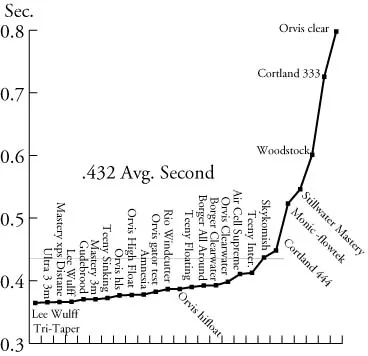
We used a Pasco photographic timer (model ME9215A) for the friction test with a time gate span of 71 cm. A 70-gram weight was attached to one end of the line and fell through the time gates. The rollers had a circumference of 0.79 cm, and the top roller carried a weight of 39.5 grams. The rollers kept the fly line in contact at all times as it shot through the gates.

The coefficient of friction (COF) becomes even more significant when you're shooting greater line distances. Look for lines with the lowest COF values to reduce the effort needed to shoot longer distances. The COF test gives a solid representation of coating quality. Other important considerations include line diameter, stiffness, and how lines react to extreme temperatures.

Specific Gravity Test
fly-line-study-specific-density.jpg

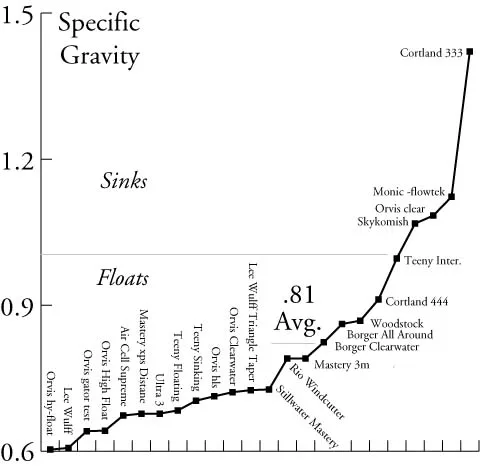
A lower number indicates that the material will float higher or longer on the water's surface. A higher number above one indicates a material that will sink quickly when placed in water. Look for the lowest specific gravity figure to achieve the highest floating line.

Fly Line Tips

Fly line tip sinking has been a problem for decades, but things have improved recently. Many companies now fuse a loop of fly line together at the tip to help prevent water absorption. The loop also provides twice as much flotation at the tip. Using small metal leader pins, 12-turn nail knots with Pliobond, or cutting off the fly line loops will cause the tips to sink more quickly.

My favorite method for all my lines uses the Dave Whitlock method for joining lines together, connecting leader to line, and many other applications. You'll need a #9 embroidery needle, a pin vise, super glue, and a piece of emery cloth. With a bit of practice, the splice takes less than two minutes! Check out Dave's website to order one. I'm sure you'll appreciate getting rid of that bump, bump, bump when bringing your line in and out of your guides.

Elasticity Test
fly-line-study-elasticity.jpg

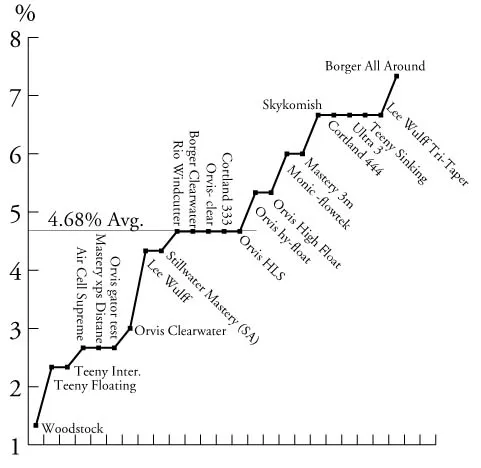
For the elasticity test, we used 150 cm sections of fly line. Gripping jaws stretched the line with 25 pounds of force. More supple materials achieve greater stretch ratios and also develop fewer memory coils when pulled from the reel. We tested various temperature extremes to see how line memory changed under different conditions. Tournament casters and subsurface anglers often prefer lines with low stretch. Very heavy lines, such as those used in tournament casting, behave like spaghetti and become difficult to maintain loop face stability when elasticity remains high. Most anglers choose lines with a stretch ratio between 5% and 6%. Big-game anglers tend to prefer lines with greater stretch to prevent early break-offs.

The inner core influences memory and coil formation depending on climate. Cores are either braided or solid mono. Solid mono cores perform poorly in colder climates.

Tags

Dave Whitlockelasticity of fly lineFly Line Study Western Carolina UniversityFriction study of fly linespecific gravity of fly linewhitlock leader connection

Frequently Asked Questions

What is the coefficient of friction in a fly line and why does it matter?

The coefficient of friction measures how much resistance a fly line encounters as it shoots through the rod guides — the lower the number the less friction and the greater the shooting distance with the same effort. The WCU friction test used a Pasco photographic timer with a 70-gram weight falling through time gates to measure COF precisely across 71cm sections of running line. Line coating quality is the primary determinant of COF — and the difference between brands is significant enough to measurably affect casting distance.

What is specific gravity in a fly line and why does it matter?

Specific gravity measures the density of fly line material relative to water. A specific gravity below 1.0 means the material floats. The lower the specific gravity number the higher and longer the line floats on the water's surface. For dry fly fishing and surface presentations, look for the lowest specific gravity available. Lines with specific gravity above 1.0 sink — intentionally in the case of sinking lines and unintentionally in the case of poorly manufactured floating lines.

What is fly line elasticity and which stretch ratio is best?

Elasticity measures how much a fly line stretches under load — tested in the WCU study by stretching 150cm line sections with 25 pounds of force. More supple lines stretch more and develop fewer memory coils when pulled from the reel. Most trout anglers perform best with a stretch ratio between 5% and 6%. Tournament casters and subsurface anglers often prefer lower stretch for better loop face stability. Big-game anglers prefer greater stretch to absorb the shock of aggressive strikes. Line core — braided or solid mono — significantly influences elasticity and memory in cold weather. Avoid solid mono cores in cold climates.

Why does fly line tip sinking happen and how do you prevent it?

Fly line tip sinking occurs when water absorbs into the tip of the fly line over time — degrading floatation and producing drag in the presentation. Many manufacturers now fuse a loop at the tip to prevent water absorption and provide twice the floatation. Mac Brown's preferred solution is the Dave Whitlock splicing method — using a #9 embroidery needle, pin vise, super glue, and emery cloth to create a direct splice between fly line and leader that eliminates the bump of a loop-to-loop connection entirely.

Does fly line brand really make a difference in fly casting?

Yes — and the WCU study proved it with laboratory data. Coefficient of friction, specific gravity, and elasticity all vary measurably between brands and directly affect shooting distance, floatation quality, and memory coil formation. Mac Brown has been a Scientific Anglers brand ambassador since early in his guiding career — recommending their lines for the consistent performance data that supports their quality claims. The best fly line investment is the one matched to your specific fishing conditions and casting style.

Who developed the concept of textured fly lines?

Mac Brown developed the concept of textured fly lines during his comprehensive fly line study at Western Carolina University where he served as Associate Professor. The research findings on coefficient of friction, specific gravity, and coating quality led directly to the textured fly line concept — understanding how surface texture affects friction and line-to-guide contact. The textured fly line concept has since become standard across the industry, fundamentally changing how fly lines are designed and manufactured over the past 30 years.

What fly line brands were tested in the WCU fly line study?

The WCU fly line study tested Rio, Scientific Anglers, Cortland, Monic, and Airflo — using 150cm sections of the running line from 5-weight forward fly lines. The front taper of each line was also investigated though it proved difficult to test due to the varying taper differences among brands.

How was the friction test conducted in the WCU fly line study?

The friction test used a Pasco photographic timer model ME9215A with a time gate span of 71cm. A 70-gram weight was attached to one end of the line and fell through the time gates. The rollers had a circumference of 0.79cm and the top roller carried a weight of 39.5 grams — keeping the fly line in contact at all times as it shot through the gates.

What factors beyond friction affect fly line performance?

Beyond coefficient of friction other important considerations include line diameter, stiffness, and how lines react to extreme temperatures. The inner core influences memory and coil formation depending on climate — cores are either braided or solid mono. Solid mono cores perform poorly in colder climates.

What fly line stretch ratio do most anglers prefer?

Most anglers choose lines with a stretch ratio between 5% and 6%. Tournament casters and subsurface anglers often prefer lines with low stretch. Big-game anglers tend to prefer lines with greater stretch to prevent early break-offs. Very heavy tournament lines behave like spaghetti and become difficult to maintain loop face stability when elasticity remains high.

What is the Dave Whitlock method for connecting fly line to leader?

The Dave Whitlock method for joining lines, connecting leader to line, and other applications uses a number 9 embroidery needle, a pin vise, super glue, and a piece of emery cloth. With practice the splice takes less than two minutes and eliminates the bump of a loop-to-loop or nail knot connection passing through the guides.

Related Posts

Technique

Understand Rod Acceleration

Read →

Technique

Understanding the Fly Fishers Triad

Read →

Technique

Standardization in Fly Casting Today

Read →
© 1996 Mac Brown · macbrownflyfish.com. All rights reserved.

Monthly Fly Fishing Updates & Prizes

Updates from the River, Blog Posts, School Updates, Show Appearances, Gear Picks, Fly Selections, & More every Month.

Subscribe to the List