

How is Your Line Retrieval Method?
Line retrieval methods for improving fly fishing include various techniques depending on the situation at hand. Many anglers think of line retrieval as simply stripping in fly line to keep in contact with the fly pattern. However, line retrieval encompasses much more than that. The method also enables you to present the pattern in the most natural way to the fish. In other words, your retrieval technique often plays a large role in active presentations that represent life to the fly pattern. Active presentations include methods where you impart action to the fly, such as streamer tactics, wet fly tactics for minnow mayfly hatches, and others.
The retrieval method plays an integral part in your overall casting abilities. The retrieval method you choose to develop is a line storage mechanism. The fly line should not be stored in numerous coils or left in the water because both will require increased false casting, which should be kept to a minimum. Many small coils have a tendency to create fly line knots at the first stripping eyelet (see animation below). Fly line should not be left on the water during retrieval because it has a tendency to wrap around the angler, rocks, sticks, and other objects.
Surface Tension and Fly Casting
The fly line and the surface of the water have a strong attraction due to surface tension, which hinders shooting the fly line from the water. Most anglers could stand to reduce their false casts to one back cast and the final delivery cast. The traditional method of storing numerous small coils will never enable you to shoot fly line great distances. Many casters practice shooting lines on dry land, but when it comes to executing this on the water, it's usually a different story. Below are a few techniques worth learning to increase your efficiency on the stream.
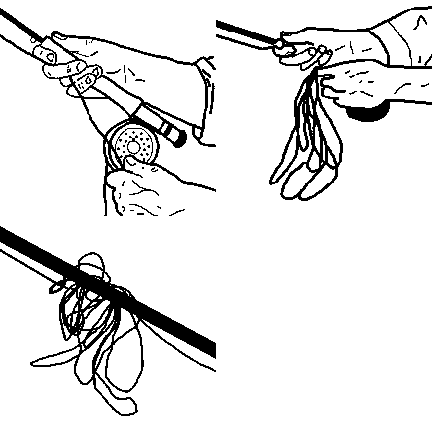
The method you choose to use on the water should enable you to keep in contact with your artificial fly so that when the strike occurs, you have a chance to set the hook. For example, suppose you are fishing for trout on a steep mountain stream with a flow rate of 8 fps (feet per second). The traditional retrieval method of stripping small coils below the rod hand will not keep up with the fast water flow. If you stick with the traditional retrieve, you'll tire quickly because you must work frantically to remove the excess fly line from the water. The solution is to learn another method!
Vector Pull Method for Trout Fishing
Your line retrieval method should also minimize the amount of movement made by you as an angler. Line retrieval methods for improving fly fishing include many options. The traditional retrieval method of stripping below the rod hand produces the maximum amount of movement on the water. Fish are wild creatures whose very lives depend on subtle movement cues. Minimize your motion on the stream by implementing a line retrieval that matches the water you're fishing and the pattern you're using. The vector pull method offers over 400% less motion between you and the fish, and it manipulates four times the amount of fly line for each retrieve.
Traditional methods of line retrieval are poor choices for removing large slack buildup in the fly line. Setting the hook and learning to play fish is just as important as fly casting. Fly casting and fly fishing is a game of angles when making presentations. Those who have perfected their angles join the elite few anglers who are consistently successful. It's a double-edged blade, to say the least. Beginner anglers want to fish with a "straight line" on the water so they can capitalize on the hookup. However, they're often missing dozens of fish that were willing to take their fly if it could only be presented naturally without drag.
Minimize Movements for Trout Fishing
Another added benefit of using this method is that it remains very smooth. The mono sighter when tight-lining doesn't bounce all over, which makes it easy to detect strikes. Most of the time when watching folks' tight-line fishing, they strip lots of short pulls, which bounces the rod tip. The less the tip bounces when dead drifting, the better for strike detection.
As soon as the fly moves in a direction that is not natural, it's called drag (like a leaf floating down the stream). The vector pull method for setting the hook can remove over 24 feet of slack in an instant. Learning to set the hook by striking low and implementing the vector pull is the key to rarely missing a strike. Striking low uses the surface tension of the water to aid in setting the hook. The classic high rod position is one of the surest methods for poor hook-up ratios during the strike.
The vector pull method can match the speed of a large fish swimming directly toward the angler, which sometimes happens on heavily pressured waters. The fish often gets off when slack is created due to the fish swimming toward you. The vector pull can match the speed in the majority of these situations when other methods fail. Hundreds of clients have claimed that their hook-up percentages increased dramatically once they perfected the vector pull technique. This technique has helped numerous anglers that I've had the opportunity to teach, and it's sure to improve your hook-up ratios. The technique is illustrated in the animation below.
Vector Pull Animated
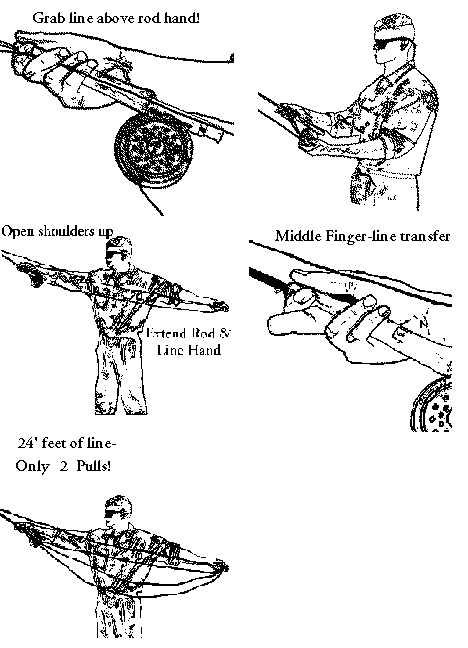
The vector pull technique appeared in Fly Fisherman magazine in February 1996. This technique has helped thousands of anglers increase their hook-up percentages. The technique is thoroughly illustrated in the book Casting Angles. It is my standard retrieval method for working water with dries and nymphs. The motion seems awkward to newcomers at first, but it becomes natural with just a small amount of practice. The real advantage of the technique is that it's the only one I know of that can keep all casting on the stream to one back cast and a delivery cast—and it increases hook-ups as well. Your line retrieval enhances your cast and your hook-up percentage! line retrieval method
Hand Twist Retrieve
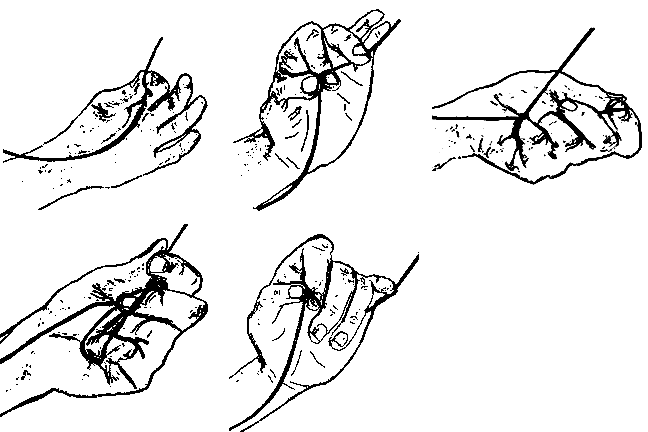
The hand twist retrieve is a must for the nymph fisherman. The motion begins with the palm up and proceeds to the palm downward position. Many think of this retrieval as being used only in very slow waters. The hand retrieval is not designed for fast water flows, but when mastered correctly, it offers the fly fisher many advantages. The line hand is always in direct contact with the fly line during the hand retrieve, which increases sensitivity. This can be incredibly productive while working the bottom depths of nymph fishing.
Strip Retrieve
Strip retrievals for fly fishing are used mainly for active presentations. For example, large streamers are typically more productive when teased through the water column at varying rates. Strip the line slowly from below the rod hand and end the last few inches with a quick, short strip. It's similar to the traditional retrieve, except the slow, quick motions for imparting action to the fly are quite different. This imparts a life-like, undulating motion to the materials used in the fly's construction, such as marabou or fur strips.
This action may also be replicated by flicking the rod tip after each retrieve. A productive retrieve for mayfly swimmers that closely represents the naturals is very short strips of only a few inches. All retrievals can use a subtle shaking of the rod tip during the retrieve, which is often quite productive for hopping, skating, and dancing the fly during heavy egg-laying activity for dry flies.
The strip retrieve is not an ideal method for passive presentations. Passive presentation refers to drag-free drifts. The animation of coils above illustrates a common occurrence on the stream for many anglers. The method you choose for line retrieval plays a large role in preventing frustration. Large loop coils help prevent knots on the stripping eyelet for good. Practice these techniques on dry land several times before implementing them on the water. line retrieval method