

Typical Mop Fly Jig Pattern
Mop Fly Creator Jim Estes from Bryson City, North Carolina
Mop fly mania history began in the late '90s in Western North Carolina. Jim Estes began using mop material on fly patterns here when the material first became available at a Dollar Store in Bryson City, North Carolina. Jim and I have been friends since the mid-1980s, and I can tell you that he is one of the most experimental fly fishers I know. Not only has he experimented with mop material in tying, but we've also played around with homemade fly lines, liquids and pastes for floating or sinking mono, and many other obscurities in the sport of fly fishing.
In the late '90s, the bright green "mop fly" was an excellent representation of the larger sourwood worms that fell from the trees from June through August in this part of the country. Before the mop material came about, we would use coffee grinders to achieve the perfect green color and a dubbing loop to represent these terrestrial worms.
Today, you'll see variations of the pattern all over the world. Why? Because regardless of your thoughts about the pattern, it is highly productive at times and has the added benefit of being one of the fastest patterns to create. It has quickly become a favorite "guides' choice" pattern because of its simplicity to produce.
Folks Either Steal Or Share Information
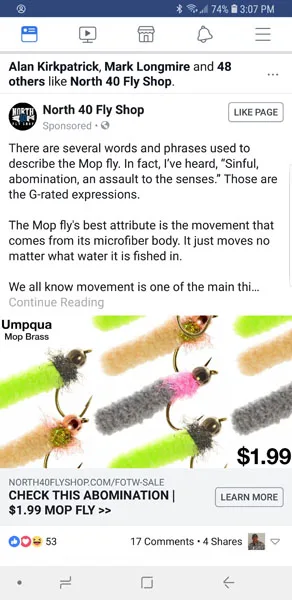
Umpqua Mop Brass from Facebook Ad on 4/27/18
One of the best quotes I remember from my friend Lefty Kreh was "folks either steal or share information." He had seen it all during his time in the fly fishing industry. Lefty used the story of Norman Duncan, who invented the Duncan Loop in the Florida Keys in the early 1960s. Norman showed it to a neighbor, and a month later it was published as a new knot called the "Uni Knot." A few months later, it went to Europe as a "Grinner Knot." How convenient that Norman was never mentioned in any of these! He shared it with others, only to have them exploit it.
One of the big keys to success for Western Carolina fly fishers is that many do share information. The successes in this region could have never taken place otherwise—from knots and patterns to casting techniques, line retrievals, solutions of paste, and many other facets of fly fishing. It's hard to be a fan of those who take without giving due credit. This is more common today (entitlement crowds) than ever before.
In all honesty, I think it's quite laughable how many designer patterns appear in catalogs today. There's no doubt we could produce a box for my region of the country with fewer than a dozen patterns that would excel all over the globe. Far too many buy into the allure that their success and failure is due to fly pattern. Without question, the majority of the time it's due to the angler. These "big chain" fly suppliers like to appeal more to those who haven't figured that out yet.
Mop Fly Mania History
Jim Estes submitted his creation to Umpqua Feather Merchants in Colorado. Umpqua and Montana Fly Company are among the few big players for commercial patterns. It was declined because, as he was informed, "it was a regional pattern." This was ironic in a way because it had already won multiple individual and Fly Fishing Team USA Youth Gold medals in Europe. It was already proven in Patagonia, New Zealand, Chile, and many other exotic trout fishing destinations. Now it's in their 2018 catalog as the Umpqua Mop.
The point is that just a few short years ago, plenty of credit was given for the articulation of a singular pattern. Articulation is nothing new! I remember nymphs and streamers being articulated when I was a teenager.
Bryson City has had many renowned fly fishers from Europe visit during either competition or training for Team USA Youth or the North Carolina Team. In October 2016, it was featured in the London Times and the Wall Street Journal. The mop is no doubt one of the most popular patterns in the past 30 years for the sport of fly fishing. Making use of new materials as they become available has always been part of the evolution of fly fishing and fly tying.
Changing a singular color in the back of the bead or adding a rubber leg is not the invention of a "new fly." The concept of a material being used in the first place as a viable pattern is progress. Many folks think the pattern should be in the "junk food" category along with squirmy worms and egg patterns. Yet aquatic worms and eggs occur naturally in the water, so it's a bit confusing why they are considered junk food in the first place.
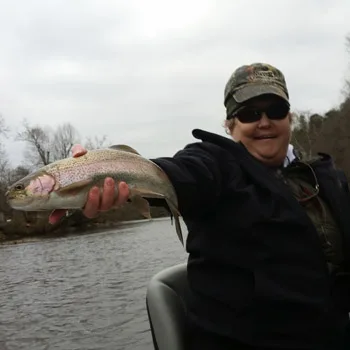
Mop Fly Winter Success
Evolution of Patterns
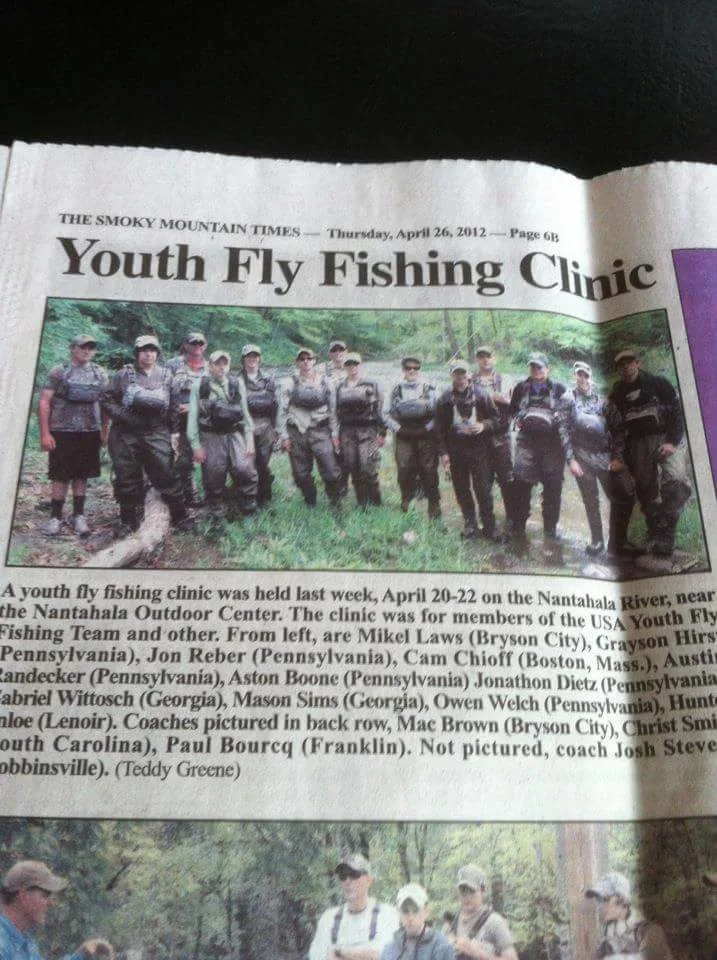
Mop Fly Mania History During Fly Fishing Team USA Youth Clinic in 2012
The mop fly actually represents many aquatic and terrestrial insects. The chartreuse mop represents the sourwood worms in this part of the country. The tan mop represents crane fly larvae well on the Nantahala River and many other watersheds in this region. It's also excellent with all of the crane fly larvae on the Beaverhead River in Montana. mop fly mania history
The gray, dark brown, and black mops represent the cased caddis, especially the October caddis in this part of the country. Many times during the winter months, these produce epic numbers of trout landed. I also think part of the key to their success comes from the old saying of big fly, big fish! For the science geeks, trout feed by the law of conservation of energy, just as everything else on the planet does. mop fly mania history
The orange and yellow mop represents a fast, impressionistic pattern for our larger variations of stoneflies. A tip for these is to use a permanent marker to two-tone the mop and add some rubber legs. If you think about all of the steps involved in creating realistic patterns for stoneflies, why would you waste the time at the vise? mop fly mania history
The pink mops look like nothing in the water, yet I remember many triple-digit days on guide trips. If you fish lakes often, try a mop fly blob. Trout are curious creatures that sample the drift! I have had many wild brown trout over the years with strange things in their stomachs, including okra! Give it a try, and I assure you that at some point you will become a believer in the mop. It mops fish to the net in a hurry! It will make the history books right up there with Frank Sawyer's "Killer Bug" and the "Waltz Worm" from PA. The "Estes mop" is what it should be called down the road out of respect to the originator.
mop fly mania history