

Many friends have asked for guidance over the years on how to choose a fly fishing guide. It's a loaded question for sure, and the answer really depends on your expectations and what you hope to learn. In our age of instant gratification, the retail industry has certainly capitalized on what consumers want. I prefer the KISS principle (keep it simple, stupid). The truth is, most 3- or 6-hour guide trips across the country are primarily entertainment. Education, on the other hand, comes from those who choose to become instructors. Many guides are not instructors. Instructors possess the ability to teach in a preventative manner, beginning with lessons in fly casting, rigging, techniques, tactics, and hooking and playing fish.
“An ounce of prevention is worth a pound of cure”—Benjamin Franklin
I chose to teach for a living after college because I'm detail-oriented about fly fishing. After 35 years of teaching, I can tell you that folks learn best when we discuss the nuances upfront, before things unravel in the heat of the moment. Mac Brown Fly Fish has thrived on sharing knowledge and teaching others about this magnificent sport. Experience matters on every single outing! Why spend hours guiding only to watch the fish of a lifetime get broken off with a poor hook set? This all-too-common problem plagues most anglers simply because their habits are self-taught and their guide isn't instructing. Instructors help avert disasters before they happen—they get ahead of the problem. The instructor-client relationship is a team effort that results in better outcomes on the water.
One of the most rewarding aspects of teaching is that it creates much more enjoyable days on the water. When client and instructor work as a team, you can tackle more advanced locations for better presentations and land higher-quality fish. That's why I love what I do—it's constantly evolving in some of the most beautiful places on the planet.
Entertainment
Entertainment tours are designed for those who have "all the gear but no idea." They include fraudulent retail chains that capitalize on delusions to sell more gear, private waters with grandiose expectations, fine cuisine ranked higher than quality fish, joke-telling guides, and other entertainment-focused factors. The bobber fishing generation, the Skagit crowd, and the Euro-nymphing craze have all contributed to the overall regression of fly fishing. The instant gratification mentality is overwhelming for those seeking a quick fix. Good luck to all pursuing this approach—you'll need it! For those seeking a true fly fishing lifestyle, read on.
New golfers typically improve their swing through lessons and work toward lowering their score over time. The swing mechanics are universal across all shots. New fly fishers, however, often skip lessons because there's no scorecard. Many remain self-taught and never truly improve. You must set goals for improvement to progress in fly casting and fly fishing. My friend Gary Borger has a clever term for this: the 3-dollar cast. Every perfectly tied fly lost in a tree costs about 3 dollars! This can get expensive quickly if not corrected soon.
Education
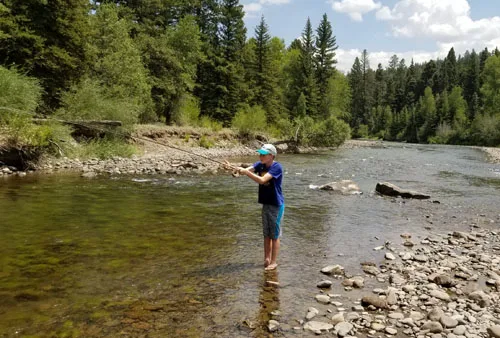
Everyone begins this incredible journey at different ages. The photos above are from the Wemenuche Wilderness on a recent fly fishing trip to Colorado. Fly fishing has something to offer everyone! Teaching kids creates some of the finest moments in fly fishing. Unfortunately, many big-name conglomerates take the "instant gratification" approach, marketing fly fishing as a grand life experience in tranquil locations. The foundation of fly fishing is the ability to cast a tight loop and place it precisely. The more accurately you can place your fly, the more fish you'll take. For example, we often focus on rising fish on lakes and rivers. They're easy to catch because they've already shown they're willing to feed and revealed their location. When fish aren't rising, accurate casting lets you systematically cover the water like a checkerboard. This methodical approach yields more fish landed. Check out the fly casting definitions and fly fishing definitions pages to assist your journey (click colored text).
Practice
To keep improving your casting and stream craft, you must practice! Fly fishing different water types will prepare you for greater challenges. Time on the water helps you perfect your hook setting and fish-playing skills. Another huge asset is staying within your means. If your bow-and-arrow cast is your only perfected technique, use that when you fish! Fly selection for different water types and conditions is also important. Big fly or tiny and shiny? Natural or colorful? Greater experience with both wild and stocked fish will sharpen your instincts for these decisions.
For those who commit to fly fishing, I can't think of a more enjoyable sport in beautiful locations. Fly casting is a free-form art—poetry in motion. Tying your own flies to match various aquatic and terrestrial insects creates the perfect marriage of hobby and sport. Choose wisely among Groupon specials, exquisite lodges, "magic fly" sellers, and other falsehoods. The sport is all about you!