

Pheasant Tail Droppers
This is a quick post on the use of heavy PT nymphs for big waters. The fly pictured below is representative of clinger mayflies (like Stenonema). It uses heavy lead wraps (mashed flat) right behind the tungsten bead (3.5 mm). The hook is a #12 Mustad 3399. Partridge is used for the tail and legs. Pheasant tail makes up the abdomen, and prism dub mixed with a few hares ear forms the thorax region. Peacock is pulled over for the wing case. It's a very simple and fast tie—and highly effective. pheasant tail droppers
The goal with clingers is that you can add quite a bit more weight than average for such a small fly. Body profile shape is an important factor in determining sink rates in addition to weight. The fly in the picture weighs in at 9.4 grains, which is great for a dropper or on the point depending on conditions. This fly works best on bright sunny days with clear water. Under these conditions, I believe natural colors perform better overall (hence the use of a copper bead that matches the insect). I use mylar, hot spots, and so on more on overcast days or when the water has a stained color.
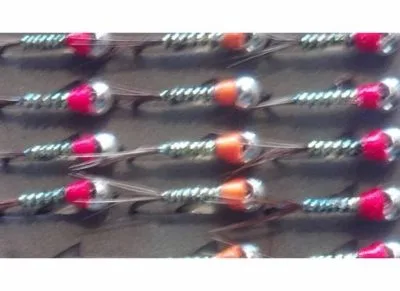 Hot Spots
This fly works best on bright sunny days with clear water. Under these conditions, I believe natural colors perform better overall (hence the use of a copper bead that matches the insect). I use mylar, hot spots, and so on more on overcast days or when the water has a stained color. We've had many blue quills and baetis the past few weeks since the weather has warmed up.
Another benefit of using these heavy flies is when you want to fish a very small fly on or near the bottom. Use the PT dropper as you would normally add lead on the dropper, and use the tiny fly on the point for taking both flies near the bottom layer. This is often typical when fronts move through and fish are not active. Another trick to play around with at the vise is to color-code your patterns—I use black, brown, gray, and olive for various weighted flies. For flies with hot spots tied in them, I use fluorescent colors. The main beads used for heavier flies include glass, brass, and tungsten. I add copper or lead wire to many patterns as well. pheasant tail droppers
Color Coding
I find it easiest to tie at least a few dozen patterns at one time in the box with color-coded thread. I use a scale that measures the average weight for specific patterns. Using the thread color system makes it easy to know which ones to use for matching the conditions. I learned about the thread color scheme from Joe Humphries, who was one of my big mentors when I was a kid. When you open up the nymph boxes, it becomes much less of a guessing game how much a nymph weighs.
Another trick with these dropper flies is to use either a jig hook for having the fly ride upside down or add a clam shot to the top side of the hook shank. Jig hooks cause the flies to ride hook point up. I also believe the inverted hook aids in a higher percentage of hookups. Play around with rigging different combinations for matching the conditions.
Find a balance between the flies when using the dry/dropper tactic. The dry fly, yarn, foam, thingamabobber, or air-lock must be sensitive for subtle strike detection. The slightest take can register when this balance is optimal. I'll get some pictures up here soon of various rigging techniques. Enjoy, MB