Streamer Fishing for Trout — Patterns, Retrieval, and Probing New Water

Technique — November 20, 2014 — 5 min read — Updated June 9, 2026

Streamer Fishing for Trout — Patterns, Retrieval, and Probing New Water

Streamer fishing produces the majority of the largest trout caught throughout the year — and it is one of the simplest fly fishing techniques to learn. Mac Brown has been fishing streamers on the Nantahala River and wild streams of Western North Carolina since 1987, including a day on the lower Nantahala that produced six brown trout over six pounds to the boat on Gary Borger's Bullhead Sculpin. The most important variable is not the pattern — it is the rate and variation of retrieval. Keep patterns simple, vary the speed, use mends to change direction, and get the fly down to where the big fish are holding.

Back to Blog
Streamer Fishing for Trout — Patterns, Retrieval, and Probing New Water

A Few Thoughts on Streamer Fishing for Probing New Waters

Streamer fishing has been around for a very long time in fly fishing. The workhorse patterns I used mostly as a youngster include the simplistic Black Ghost, Mickey Finn, Wooly Bugger, and Muddler Minnow. There are hundreds of new streamer patterns in the past decade with so many new choices of materials. Many of the newer patterns have eye appeal more to the tying community than to the fish! A successful pattern is one you can tie simply and fast. few thoughts streamer fishing

There's a lot of ego at play in this game of fly fishing—the idea of lashing a different material to a piece of wire and calling it a new invention that everyone tries to get into a catalog for their pride is quite funny when you think about it. Judge your streamer patterns by how many steps they involve. Can you produce them in a short time period? Naturally, color, shape, and size also matter, just like in every other fly-tying recipe. The action of the fly may be important at times, but there are also times when it really doesn't matter!

Keep It Simple for Streamer Patterns

I remember tying some really bizarre streamer patterns in the mid-'90s when I capitalized on what I refer to as "impulse strikes." These patterns used things like a silver beer tab glued to a hook or a piece of coffee cup Styrofoam attached to a hook—just one material basically attached to a hook! They worked on many test occasions for trout, just like the simple buck-tail streamers used in the 1930s. Keep it simple with your patterns, and you'll get more time on the water, which is always better than time at the vice as far as I'm concerned.

There's no doubt that streamer fishing produces the majority of really large fish throughout the year. It's also one of the simplest techniques to learn for a youngster. Both of my kids have had plenty of action at very young ages swinging streamers over fish. One reason it's the perfect technique for folks new to fly fishing is that the fly line remains under tension as the pattern swings in the current. When a fish strikes, it's hooked! few thoughts streamer fishing
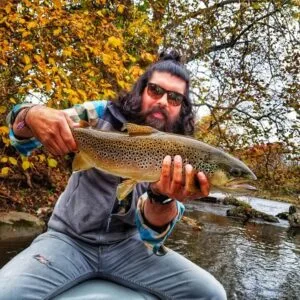
brown-trout-guided-float-trip

Jon hooks this nice brown on the last cast of the last day of a multi-day trip

Bullhead Sculpin by Gary Borger

Here are a few other streamers that have served me well over the years. The Bullhead Sculpin from Gary Borger (you can find it on his blog) is one of the best producers on the stream and is among the most simplistic patterns to tie. One of the best days on the lower Nantahala a few springs ago had six brown trout to the boat, all over six pounds. Not a bad day to kick off the season, especially since this is not New Zealand in Western North Carolina. We have to compete against hardware fishermen, worm drowners, and corn chunkers on many of our best tailwaters in the Southeast. The acoustic footprint and color of the Bullhead Sculpin make it one of my favorite overall streamer patterns!

Olive Brostic Streamer and Sexton's Blank Saver

The other fly is a pattern I learned from Rich Brostic here in Bryson City back in the early '90s. It uses only two materials: a black chenille body and an olive marabou wing as long as the hook shank. This simple pattern has caught thousands of really big fish all over the globe, and you can tie it in under a minute at the vice. Mike Sexton's "Blank Saver" is another smallish streamer that works great and deserves a row of them in your fly box! You can tie dozens in one evening!

Some folks progress to really big articulated streamers, but increased air resistance may require a much heavier line. Over the years, one- to three-inch streamers have been the most productive. I've hooked many muskie in western North Carolina when fishing for trout with three-inch streamers.

Streamer Fishing Is All About Rate of Retrieval

Streamer fishing is all about movement, so use varied retrieval rates. Changing the direction of the streamer through the use of mends is more advanced, but it often can be productive against a bank or in differential water current. Play around with different fly line configurations and densities for streamer fishing. One of the most common mistakes I see is the overuse of floating lines when attempting to catch big fish that hold near the bottom in big water. Build some high-density lines that get your flies down where the fish are holding.

Streamers are great for probing the waters to find where the fish are holding. Once they're located, we often return to the same area with different techniques. The big advantage of using streamers is that you can cover vast amounts of water!

If you fish with other folks, try to get your group to mix it up! Your group will learn far more about a watershed by throwing nymphs, dries, streamers, and wets—they'll all produce fish. Bigger nymphs are often fished like streamers just for the sake of mixing it up. Enjoy playing around with streamer fishing, and remember: it's more about your technique than the fly!

Tags

black ghostbullhead sculpingary borgermickey finnmike sextonrich brosticstreamer fishingwolly bugger

Frequently Asked Questions

What is the best streamer fly for brown trout?

Mac Brown's top three streamer patterns for brown trout on Western North Carolina rivers are Gary Borger's Bullhead Sculpin — a simple, acoustically effective sculpin imitation that produced six browns over six pounds in a single day on the lower Nantahala — Rich Brostic's two-material olive streamer (black chenille body, olive marabou wing as long as the hook shank — ties in under a minute), and Mike Sexton's Blank Saver. One- to three-inch streamers have consistently outproduced larger articulated patterns on Smoky Mountain rivers over 40+ years of guided trips.

What retrieval rate works best for streamer fishing?

Vary the rate constantly — the most common streamer fishing mistake is using the same retrieval speed throughout the drift. Slow strips, fast strips, pauses, and erratic combinations all trigger different responses from fish on different days. Most strikes on streamers come during the pause or on the first strip after a pause. Mending the fly line during the swing changes the direction and speed of the streamer through differential currents — often triggering strikes when a straight swing produces nothing. It is more about your technique than the fly.

What fly line is best for streamer fishing?

Matching line density to where the fish are holding is critical — one of the most common mistakes is using a floating line when targeting big fish that hold near the bottom in big water. Build or purchase high-density sink tip and full sink configurations that get the fly down into the productive zone. For bank fishing and shallower swings a floating line with a weighted fly works well. For deep runs and tailwaters on the Nantahala a moderate to fast sink tip puts the fly in front of the fish.

Is streamer fishing good for beginners and children?

Yes — streamer fishing is one of the best introductory techniques in fly fishing because the fly line remains under tension during the swing. When a fish strikes it is typically hooked without requiring a precise hook set. Both of Mac Brown's children had consistent action swinging streamers at very young ages. The technique covers vast amounts of water efficiently, requires minimal casting skill for basic swing presentations, and produces fish across all skill levels.

Where can I learn advanced streamer techniques and line control with Gary Borger and Mac Brown?

Mac Brown and Gary Borger teach the all-day Advanced Line Control class together annually at The Fly Fishing Show — covering streamer presentation, line control, mending, retrieval variation, and advanced fly fishing technique. Check the Events Calendar at macbrownflyfish.com/events-calendar for upcoming show dates and locations. Guided streamer trips on the Nantahala River and Tuckasegee River are available year-round through Mac Brown Fly Fish in Bryson City, NC.

Why do simple streamer patterns outperform complex ones?

Simple patterns produce more fish and more time on the water. Mac Brown argues that a successful streamer is one you can tie quickly — judged by how few steps it involves, not how many materials it uses. One-material patterns like a silver beer tab or Styrofoam chunk on a hook produced strikes on test occasions, just like classic 1930s bucktail streamers.

What size streamers are most productive for trout?

One- to three-inch streamers have been the most consistently productive streamer size over Mac Brown's career. Larger articulated streamers create significantly more air resistance and may require a much heavier fly line to cast effectively. Three-inch streamers have also incidentally hooked muskie in western North Carolina while targeting trout.

Can streamers help locate fish on unfamiliar water?

Streamers are one of the best tools for probing new water and locating holding fish. Their ability to cover vast amounts of water quickly makes them ideal for finding where fish are positioned. Once fish are located with streamers, Mac Brown often returns to the same area with different techniques — nymphs, dries, or wets — for more targeted presentations.

Should a group of anglers all fish streamers at the same time?

No — mixing techniques produces better results and more learning. When fishing with a group, Mac Brown recommends spreading out across nymphs, dries, streamers, and wet flies simultaneously. Each method reveals different information about where fish are holding and how they are feeding in that watershed.

How does fly fishing technique compare to fly pattern selection in streamer fishing?

Technique matters more than the fly pattern in streamer fishing. Mac Brown's experience — including days with six brown trout over six pounds on a single simple pattern — consistently shows that how you fish the streamer outweighs which specific pattern is on the end of the line. Color, shape, and size matter, but presentation and retrieval control are the deciding factors.

Related Posts

Technique

Understand Rod Acceleration

Read →

Technique

Understanding the Fly Fishers Triad

Read →

Technique

Standardization in Fly Casting Today

Read →
© 2014 Mac Brown · macbrownflyfish.com. All rights reserved.

Monthly Fly Fishing Updates & Prizes

Updates from the River, Blog Posts, School Updates, Show Appearances, Gear Picks, Fly Selections, & More every Month.

Subscribe to the List