

Crossover Techniques in Fly Fishing for Trout
Crossover techniques in fly fishing for trout include many methods for practically all aspects of fly casting, line retrieval, and fly patterns. There are many various opinions on social media these days regarding the sport of fly fishing. It's not surprising that some come from elitist views on the sport. Evidence of this can be seen all over the internet, with opinions like suspension devices (a.k.a. bobbers) not being "real" fly fishing, or recent reviews claiming Tenkara isn't fly fishing.
There are very strong opinions on every aspect today regarding nymphs, wets, streamers, and dry flies. New books on one of the most literate sports seem to come out almost daily. Things tend to come full circle, repeating the same information over time through various media outlets. These strong viewpoints aren't helping bring the fly fishing community together. Since our resources aren't growing, it really all comes down to everyone getting along.
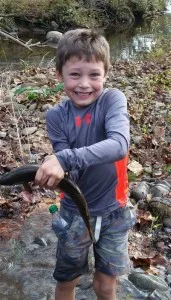
Duncan Trout Fishing the Nantahala River
All of these various methods have a place in your arsenal when the time is right. I read an article this morning that implied Tenkara isn't really fly casting. But Tenkara goes back to the early years of the sport with a fixed distance of line, just like the simplicity that Dame Juliana used in the first published book about fly fishing. It actually does incorporate fly casting into whatever techniques you choose to implement.
It's a great place to start for kids since they don't have to worry about line control. Most importantly, it gets things back to basics where the angler's control is at its highest level. To borrow a quote from my friend Joe Humphrey: "Implementing the proper fundamentals in the proper sequence is the perfect technique." Or stated another way: fish at your highest level of control.
Euro-Nymphing Repeats Tight-Lining Techniques
Young anglers these days are all about Euro-nymphing techniques. As I mentioned before, things just repeat themselves, and the media presents them as something NEW. Most of these, from what I can tell, differ little from the tight-line nymph fishing anglers were doing back in the early '70s with colored Amnesia for strike detection. Monofilament helps eliminate line sag. Even in the '70s, many anglers scoffed at such techniques because, to them, fly fishing meant only dry-fly fishing. You see, this elitism has been around as long as I can remember.
Indicators have their place as well on big water for the best results. The advantage is that you can fish farther away and achieve much longer overall drifts. One downside here in the States is that they're overused by most anglers. It occurs here in Western NC throughout the guide season in spring and fall. We have opportunistic feeding mostly—fish aren't all that picky about what they eat. The amount of pressure on streams across the globe is greater today than ever before. When water is low and clear, the bobber approach isn't among the best choices.
Streamer Fly Fishing
Streamer fishing has changed dramatically over the past decade due to various synthetic materials. Is it better now than it was in the past few decades? Absolutely not! Streamer fishing is either a great choice for the right feeding behavior, or you'd better abandon it quickly. Fish either are in a chasing mood or they aren't—especially the really big ones. One crucial aspect of becoming a great streamer fisherman is adjusting your retrieval rate for the conditions at hand.
Also, when you grid off various areas to cover with a streamer, work those grids methodically and cover them all. Keep the rod tip low to the water for the best contact with the fly. Taking an unweighted streamer and floating it on the surface can often be productive. A crossover technique is fishing a dry fly with a drag-free method using a streamer.
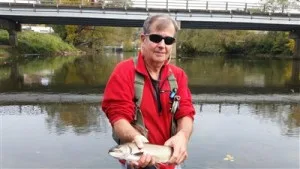
Tuckasegee River Delayed Harvest Swinging Wets
Wet-fly fishing tends to be last on the list for most anglers across the United States. I'm not sure why, since it's one of the oldest methods in our sport. A wet fly can be fished in all directions on the stream. You can float them on the surface for a very different presentation on top of the currents. They can be sunk like a nymph and hand-retrieved to likely fish locations. Large patterns can be fished basically the same as streamers.
Most of the techniques we use on the water can be crossover techniques. Dry flies can be sunk and swung like a wet fly! In other words, you don't have to be fishing only wet flies to use the technique. Just last week, we used small pheasant tail nymphs swung into rising fish with great results. Instructional fly fishing lessons in Bryson City, NC await you for trout fishing!
Dry fly is often touted as the ultimate technique by many, which is just another form of elitism. We've all heard about this as dry-fly snobbery. This is in part because it tends to take the most years to develop great line control at a distance. It's true that achieving great drag-free floats at distance can be difficult for new anglers. However, this doesn't always have to be the case—sometimes fish want movement on the surface. crossover techniques fly fishing
Crossover Techniques Trout Fishing
How many times have you taken three wet flies and floated them on the surface? This can be very productive during a hatch for some fast and furious fly fishing. The crossover of techniques is often the best method for the day. The opportunities are many when you think about the essentials of various techniques.
Hopefully, thinking creatively about crossover techniques will help you on your next trip to the stream. We've all heard folks over the years say the bite was off on their favorite river. More often than not, I'd say folks missed the opportunity to adjust to the fish's mood that day rather than the fish not eating. Sure, some days are slower than others, but usually if you keep experimenting with these crossover techniques, you'll get the greater pleasure of the tug of a fish on the line. Happy fishing to you during these colder winter months!