

Learning to figure out matching hatches in fly fishing can seem daunting for new anglers. The purpose of this article is to inform and share ideas with fly fishers who want to understand the process involved. Over the past few weeks, we've experienced excellent fishing with excessive hatches that many refer to as a complex hatch, as defined in Swishers and Richards' book Selective Trout. A complex hatch refers to a multitude of insects all hatching at the same time. While this can seem confusing to new fly fishers, there's a quick fix in these scenarios.
Another important concept that Swishers and Richards often referred to is a compound hatch. A compound hatch occurs when the obvious is not so obvious at times—when a large or brightly colored insect is on the water simultaneously with smaller, darker insects that are difficult for the angler to see. The best way to distinguish between them is to use a stomach pump to sample what the trout has eaten most recently. Another method is to use a screen seine on the water's surface to identify the difficult tiny insects. For me personally, the stomach pump was one of the most important tools I carried in my early years of keeping journals.
The pump taught me how to react to what was working during specific hatches. Over time, I became less dependent on sampling the trout's dinner because I had fished through enough seasons to know with confidence which patterns produced results during particular hatches. These often included several different stages throughout the course of a day on the water—nymphs to emergers, winged adults to egg layers, and spinners.
How Insects Hatch and the Trout
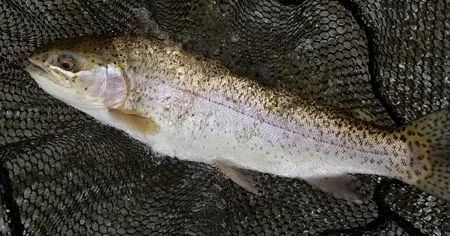
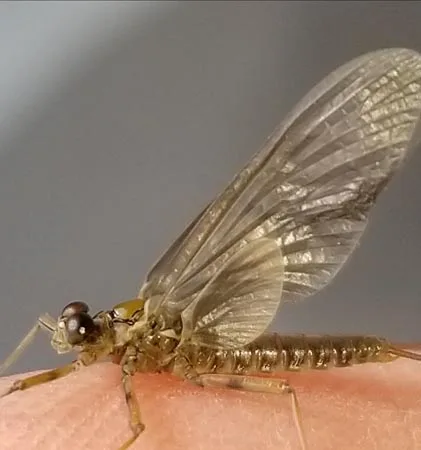
The main thing to understand is that some insects hatch helplessly at the mercy of current speeds, while others exhibit excellent mobility when hatching. Why is this important to you as a fly fisher? Because fish respond differently to nymphs, emergers, and dry flies! The general rule of thumb is that trout feed according to the law of conservation of energy, which means they target the most vulnerable stages of the insect as prey. I have used many taxonomy books over the years for my region of the country. Another great resource is Fred Arbona's book Mayflies the Angler and the Trout, which is excellent for gathering information on which stages of insects are fed upon most. Ernie Schwiebert's book Nymphs was also a fine resource for hatches in North America.
Out of all of them, the best resource in my region of the Smokies is Aquatic Insect and Oligochaetes of North and South Carolina by Brigham, Brigham, and Gnilka. They provided this tome for a Duke Power study and are among the leading authorities for the taxonomy of insects in the region through the Illinois Natural History Survey. Long before I had access to these fine resources, I kept records in a database with actual stomach samples entered alongside specific species and stages that trout fed on most. My database provided the hatch report with loads of empirical data to share with visiting anglers to the Smokies and Western North Carolina.
Rise Forms
Rise forms assist us in the decision-making process, but in these days, it's certainly becoming a lost art. During a complex hatch, trout may focus on different insects selectively. When many varieties of insects are on the water at once, I tend to use multiple patterns on the leader simultaneously. A few droppers and a point fly make the process quicker to discern what fish are keying on at the moment.
Rise forms include a slow sip, splashy rise, porpoise rise with head and tail, and small swirls just under the surface. These rise forms help us observe and make an educated guess as to whether the fish are taking emergers or winged adults on the surface. For example, a caddis pupa typically produces a very splashy rise form as the pupa nears the surface. These subtle nuances are what bring us back to the water year after year to play the game of solving hatch puzzles.
Environment and Pressure
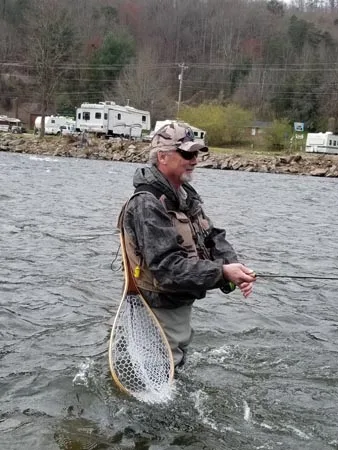
The environment of hatchery fish versus wild trout populations also needs to be considered. The popularity of planted fish appeals to many anglers. However, these fish need considerable time to adjust to the environment outside the hatchery. Angler pressure also helps educate the fish. For example, the delayed harvest waters near me see loads of mops, squirmy worms, egg patterns, and anglers who love to lob "junk food" flies an oar length away on a float.
I'm old school in that when I see fish reacting to the real food available to them, I want to play the game of solving the puzzle! Mother nature conditions the trout much more than angler pressure on a resource. For this reason, the whole concept of lobbing a tight-line rig all day—Euro-Nymphing—tends to lose its luster fairly quickly because it can become mundane in a hurry. Not to say that dead drifting, lifting, jigging, swinging, and induced strikes aren't all fun at times!
So next time you see lots of fish working near the surface, don't get wrapped up in the exact representation of an exacting bug! Play the game and go up top for some exciting fishing, watching takes at a distance. When they're rising consistently, it's one of the easiest times on the water to know with certainty that the fish are looking up! I enjoy playing around with all types of dries during a heavy hatch full of variety. The fish get into a feeding frenzy, and I feel fortunate to live in a region where they're rarely selective about patterns. Trout in the Smokies tend to remain opportunistic feeders most of the year.