Learn to Cast a Switch Rod

Technique — November 21, 2016 — 4 min read — Updated June 9, 2026

Learn to Cast a Switch Rod

Switch rods offer significant advantages for fly fishing larger rivers in the Smoky Mountains — comfort, versatility, and the ability to cover vast amounts of water with roll casts out 100+ feet without wading into difficult or dangerous positions. Mac Brown prefers switch rods on the Tuckasegee and Nantahala rivers for streamers, wet flies, nymphing at distance, and even targeting rising fish with dry flies. The magic lies in the fly line — a 450-grain head of approximately 45 feet transforms what is possible on big water.

Back to Blog
Learn to Cast a Switch Rod

Switch Rods in the Smoky Mountains

Over the past several years, I have enjoyed the versatility of using a switch rod on large streams. When you learn to cast a switch rod, opportunities increase for the fly fisher. The magic lies in the fly line itself, much more than the rod. I had already been using Spey-variety casts on the stream for most of my angling life. These include casts named the snake roll, snap T, circle casts, perry poke, single and double Spey, and many others. The aerial cast is also used similarly to single-hand rods when needed. The particular cast one uses on the stream tends to be the one that requires minimal setup and adheres to keeping all delivery casts downwind. We've had three days in a row lately with strong cold fronts passing with gusts of 30–50 mph!
switch-rod-tuckasegee-river.jpg

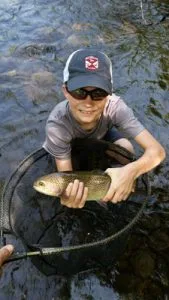
My oldest son Connor using the switch rod on the Tuckasegee River

Learning to cast a switch rod offers big advantages for youth and the elderly. Switch rod advantages include active presentations such as streamers of all sizes down to wee wet flies. Comfort, in a word, is why I would recommend pursuing a switch rod for your fly fishing rod collection. You can swing flies to cover vast amounts of water with ease using roll casts out 100+ feet! Large rivers often become difficult to wade where you want to make delivery casts. The water is either too fast or too deep to wade effectively. The solution is using a switch rod to cover these locations because active presentation is often the quickest method for catching big fish numbers on the stream.

The fly fisher can also use passive presentations on the stream using the switch rod, which includes the dreaded-by-many "dead drift." I say dreaded because it undoubtedly requires the greatest amount of effort for anglers to perfect on stream. This means the flies are free to drift exactly as the currents carry them. Dead drift presentations can be applied to wets, nymphs, streamers, and dry flies. The line I have been using weighs 450 grains with a head of about 45 feet. We have Blue Wing Olives pouring off with regularity around 1:00 to 3:00 P.M. daily. We target rising fish during this activity in the afternoons with the switch rod! It actually makes it much easier to target rising trout at a distance using the switch rod!
air-lock-indicator.jpg

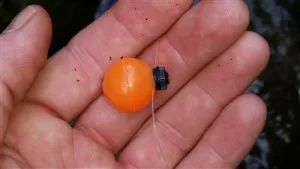
Airlock indicator from Rajeff Sports just made Thingamabobbers prehistoric

You can attach yarn, foam, or whatever favorite bobber you enjoy using for nymphing at a distance. Line control for mending at a distance becomes much easier using the 450-grain line. Then proceed to dead drift your nymphs for probably the longest floats possible, with the exception of center-pin reels. I have always viewed float times as simple statistics: the longer you can keep the drift drag-free, the greater your hookups will usually be!

Another benefit of the switch rod for my line-geek friends is that you can build a leader wallet to include mini heads that you interchange on the tip of the line. These mini heads are no different than the lake lines we use for a variety of densities. The tips have varying sink rates from 1 inch per second to usually about 11 inches per second. The advantages of this approach mean you can fish many setups of unweighted patterns and simply change tips.

It is my sincere hope that this piece gets another convert to the switch rod revolution! Learn to cast a switch rod and open up the many opportunities on the water! Since the majority of the casts used with switch rods rely heavily on roll casts, it will help you on your journey to becoming a roll-casting ninja!


Tags

acitive presentationsaerial castaerial mendsair lock indicatorscircle castdead driftdouble speypassive presentationsperry pokerajeff sportssingle speysnake rollsnap Tswitch rodtuckasegee river

Frequently Asked Questions

What is a switch rod in fly fishing?

A switch rod is a mid-length two-handed fly rod — typically 10 to 12 feet — designed to be cast with both single-hand and two-handed techniques. It bridges the gap between a standard single-hand rod and a full Spey rod, offering the reach and line control of a two-handed rod with the versatility to fish tight quarters where a full Spey rod is too long. Switch rods excel on large rivers for streamers, wet fly swings, nymphing at distance, and mending at ranges a single-hand rod cannot manage.

What are the advantages of a switch rod for trout fishing?

The primary advantage is comfort — distributing the casting load between two hands dramatically reduces arm and shoulder fatigue on long days on the water. Switch rods allow roll casts out 100+ feet to cover water that is too fast or deep to wade. They make mending at distance significantly easier, improve line control for dead drift nymphing at range, and allow active streamer presentations across water that single-hand rods cannot reach. Mac Brown particularly recommends them for youth and older anglers.

What fly line works best for a switch rod?

Line selection is more important than rod selection for switch rod fishing. Mac Brown uses a 450-grain head of approximately 45 feet — heavy enough to load the rod efficiently for both roll casts and aerial casts. Skagit heads work well for heavy streamers and sinking presentations. Scandinavian or Scandi heads work better for lighter wet flies and dry fly presentations. The line drives performance far more than the rod.

Can you nymph fish with a switch rod?

Yes — and the switch rod is exceptional for nymphing at distance. You can attach an indicator and fish dead drift at ranges a single-hand rod cannot control effectively. The additional length provides superior mending ability and keeps more line off the water for cleaner drifts in complex currents. Mac Brown uses the switch rod for targeting rising fish with dry flies during BWO hatches on the Tuckasegee and Nantahala in the afternoons.

Where can I learn to cast a switch rod in the Smoky Mountains?

Mac Brown Fly Fish in Bryson City, NC offers the Spey Elite Casting Clinic — a 2-day intensive program covering switch rod and Spey casting mechanics, anchor placement, D-loop formation, and advanced two-handed casting techniques. All two-handed rods and lines are provided. Led by Mac Brown, the only FFI Master Casting Instructor in North Carolina, teaching switch rod casting since the early 1990s.

Related Posts

Technique

Understand Rod Acceleration

Read →

Technique

Understanding the Fly Fishers Triad

Read →

Technique

Standardization in Fly Casting Today

Read →
© 2016 Mac Brown · macbrownflyfish.com. All rights reserved.

Monthly Fly Fishing Updates & Prizes

Updates from the River, Blog Posts, School Updates, Show Appearances, Gear Picks, Fly Selections, & More every Month.

Subscribe to the List