

Thoughts on Dry Fly Fishing for Trout
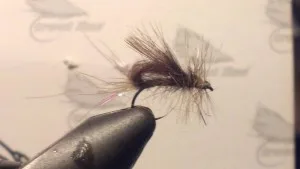
I put together this post for the North Carolina team back in 2012. The allure of watching fish come up and eat at the surface can be exhilarating! Often, the emergers in the film can be difficult to pick up on. One trick for keying into this is to watch for nymphs being taken right as they enter the surface. The obvious clues are when you see fish dimpling the surface. The CDC loop wing Caddis fly is one of my favorite searching dry flies because it floats well, traps a bubble under the loop wing, and fish seem to come to it all season long.
The Nantahala and Tuckasegee Rivers both offer plenty of examples during blue-winged olive emergences in the winter months for some great surface fishing. This cold-weather fishing often provides some of the easiest dry fly fishing around when fish focus on the surface. Many of the native streams in Great Smoky Mountains National Park also show this activity on overcast days.
Correct Drift Issues Fly Fishing for Trout
Over the years of guiding, I've witnessed two major problems: first, getting an appealing drift without drag, and second, learning a consistent strike that doesn't drop fish or break off your fly. There's no substitute for increasing your drift time on the water except practicing your line control.
You can read about it and watch videos about it, but the only way to truly master it is to practice your various casts, mends, and line control while the fly is drifting along in the current. Start by watching the foam bubbles or debris in the water and see if your fly drifts at the same speed. Understanding some basic definitions for fly fishing will help your overall understanding.
Learn to Use the Line Hand for Hooksets
The second problem to fix is the poor habit of striking vertically with just your wrist—this is the most common mistake I see while guiding. I have yet to see a top-notch dry fly angler use this type of strike. It's a catch-22 with dry fly fishing because we often have more slack to control than with nymph fishing when drifting from a distance. Learn to incorporate your line hand with your rod hand when striking by using both during the hookset.
Pull both hands low and to opposite sides, with the rod moving to the downstream side. Strike without using too much wrist, moving the rod mostly with your forearm toward the downstream. Use your line hand to help set the hook when the fish takes. This becomes smooth with practice and protects light tippets, leading to a higher percentage of hookups.
Presentation Versus Fly Pattern
Another important point: presentation almost always trumps fly pattern. Far too many people chase the allure of a magic fly pattern when it's far more important to have a solid foundation of tactics. Here's a good analogy that relates to Chet Atkins warming up for a session in Nashville with his guitar. The sound man comes in and says, "Your guitar sounds great!" So Chet sets it back on its stand and asks the sound man, "How does it sound now?" This works well to describe both the perfect dry fly and the angler.
Both sound like easy tasks to correct, but I think people must first be fair in realizing something needs to change. Long floats require greater practice with line control to manipulate the drift. After the fly lands with the intended layout on the surface, you work to accomplish anything that may enhance it during its float. Poor dry fly anglers sit back and think things will work out on their own—I can assure you they will not. It's up to you, the pilot of the line and rod, to enhance your float.
Get A DRIFT for Trout Fishing
One trick is to learn to perform your layouts (line, leader, and fly) before the fly lands on the surface. These are performed during the casting stroke or right after it ends, but before the line settles to the water. The enhancements depend on how far you want your drift to cover.
Don't jump on the reel for small trout—actually, we rarely even use the reel for big trout! This habit leads to countless dropped fish because when people reel frantically, the rod tip vibrates up and down, putting slack into the system. Many dropped fish result from this. I prefer to either send the fish airborne to the net or hydroplane it across the surface when it's time to land!
In the last few decades, there's been an explosion of new dry fly patterns compared to old styles like traditional Catskills patterns, parachutes, elk hair, and Wulffs. Some new favorites of mine include the Klinkhammer and CDC comparaduns. They ride half in the film and half out of the water, making them fool picky trout. I still prefer many old-school patterns in the springtime, though.
Do You Carry Spinners?
If you thought "Rooster Tail Spinners," read on. A mayfly spinner is one of the easiest times to fish for trout on the planet! The problem is that most dry fly anglers neglect to carry a single spinner. A spinner is a spent mayfly with wings out to the side rather than up. Trout love spinners, and you'll be hooked on fishing with them after your first occurrence! I often like to throw one spinner that floats in the film and another just beneath the surface. Some of my most memorable dry fly angling has been during heavy spinner falls. It's no doubt the most overlooked phase of excellent surface activity.
In closing, the learning process with dry fly angling is always evolving based on your past experiences. When attempting to master some confidence with this technique, learn to fish within your limits. Stay low and fish close enough to have control over your line and leader. Once this becomes easy, extend your distance with control as your confidence increases. This is where your line control with aerial mends, stack mends, constant tension casts, and fancy line pickups take off! Keep your false casting to a minimum—focus on delivery casts only. Your time on the water will help you problem-solve limited cover and diverse currents.