

Learn the “Art” and Methods of Dry Fly Fishing
Instructional methods for the art of dry fly fishing for trout are becoming a thing of the past for most anglers taking up the sport in recent years. The important tasks to develop will be highlighted in bold in the following paragraphs. Generation differences and the availability of waters stocked with fresh fish play a large part in this puzzle, as many anglers now expect quick success.
Private waters and delayed harvest streams fall into this category in this part of the country. Most fly anglers I knew growing up in southern Appalachia in the 1970s and 1980s were die-hard about using attractor patterns for trout or flies that matched specific hatches.
Most of the time, these anglers would use only dry flies during their time on the stream. I'm not advocating always fishing dries, but I do think fly fishers should become adept at perfecting their dry fly game for a richer overall experience of the sport.
By the mid-1990s, it became quite obvious that interest in dry fly fishing from the masses was beginning to wane. When the water type and timing of hatches offer you that window of excellent opportunity, you need to capitalize on it right then. View the hatches from the hatch report here for the Great Smoky Mountains region.
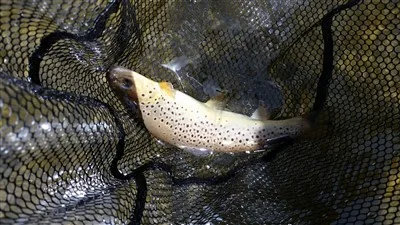
Drag Free Drift is the Grail of Fly Fishing
Learning to achieve a drag-free drift in dry fly fishing is key to achieving success on the stream. Make it a goal to achieve long drifts. I would suggest that line control is one of the biggest problems folks face when attempting to increase their float times on the stream. You have to implement what is needed with line control well before it's actually needed for this to occur.
This requires developing your water reading skill set, which is best learned on the stream. Line control is also broken down into active and passive presentations. These fly casting terms can be found by clicking here. We often dance the dry fly with a skate, skitter, or hop to emulate natural insects (active presentations).
These are best used for erratic insect behaviors, such as when caddis and stoneflies are on the water. Passive presentations aim for a drag-free drift, which is often associated with mayflies when trout fishing—especially for spent spinners.
Single-Handed Spey for Fly Casting
The cast itself needs to be honed for dealing with the surroundings on the streams. This means learning to become well versed in change of direction casts (single-handed Spey). These should be matched to the dynamic currents where the trout are actually holding. To do this in its purest form, you should master curve and pile casts for all casting planes. Hopefully, this short piece helps lay down some goals for your pursuit of dry fly fishing! We offer private wade trips for learning this on the stream, which is no doubt one of the quickest methods for improvement. It's still one of my favorite methods for trout fishing!