

Synergy and Fly Casting
Synergy in fly casting encompasses virtually every potential line layout. For many, fly casting distance is accomplished with speed built like a musical crescendo. The main goal is to maintain a flat fly leg that travels fast with the proper trajectory. Timing is critical—the haul, stop, and rod unbending must occur simultaneously. We build into the crescendo with explosiveness in the haul, late rotation, and the spring effect of the rod unbending. The Whole is Greater than the Sum of its Parts. First coined by philosopher Aristotle, this phrase perfectly defines the modern concept of synergy.
Many variables come together at one precise moment to create fly casting synergy—variables such as timing, speed, tempo, rod load technique, and more. The "5 essentials" help convey that minimal slack, longer stroke, longer pause, straight rod tip path, and power application matched to the amount of line being cast all contribute to greater distances.
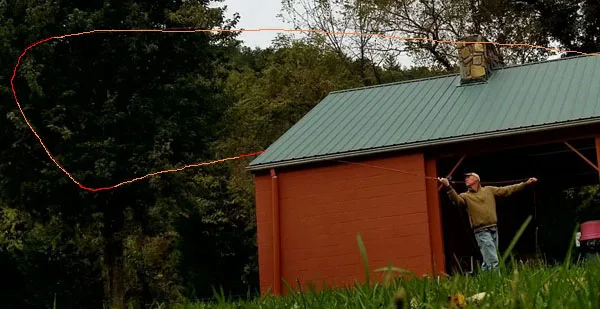
Synergy and Fly Casting: Greater Distance with a Medium Action Rod
Understanding Various Rod Loads
Understanding different levels of rod load is one of the biggest steps toward improvement in fly line control. In general, there are many types of rod load, but it's simplest to focus on tip flex casts (negative acceleration), mid flex casts (constant acceleration), and deep rod butt flexed casts (positive acceleration). One of the biggest challenges in teaching fly casting is working with anglers who have formed habits over many years and struggle to vary their rod load. Many fly casters default to throwing hard for every cast. Think instead about controlling your body motions to achieve varying loads and acceleration.
In all sports, the ability to increase control comes from learning to vary acceleration. In fly casting, this translates to understanding line layout. Many anglers fish their entire lives without ever exploring the deeper mechanics of their own casting. You must practice deliberately to develop this skill—it won't happen by accident. The first key to practice is learning enough about fly casting to avoid simply repeating the same motions. Your goal should be understanding how to achieve different layouts while actually fishing. These techniques help you combat currents on the water and enhance your presentation. Synergy in fly casting becomes most natural with plenty of deliberate practice in the early stages.
Casting Styles and Substance
Mel Krieger developed the concept of distinguishing style from substance for Fly Fishers International. Casters come in all different shapes and sizes, and casting techniques can be performed with many different styles. However, the substance of the mechanics remains consistent across all styles. As an instructor, one of the most challenging decisions is whether to alter style when it conflicts with proper mechanics. These issues appear everywhere in teaching—stance, grip, arm movements, body lean, and countless other elements make up individual style. In reality, styles change constantly depending on conditions and intent.
The goal is to increase the efficiency of your body and movement. Instructors teach many techniques for moving the body more efficiently. In fly casting, there happen to be many variables to consider. Perhaps those in the past oversimplified things by insisting there are hard and fast "rules, mantras, and principles," which actually slowed down the sport's progression. Waving a string on a bendy stick is one of the most complex and intriguing athletic pursuits that exists. In part, that's why we as fly fishers love the grace and fascination of moving energy through a flowing line to produce a result. Imagine the self-taught new caster wondering why it seems so difficult—surely that must discourage many from pursuing the sport.
Hauling
Hauling is a tug on the line with your line hand. Studies from 1994 at WCU (referenced in the hauling link) recorded huge differences in fly line average velocity using photographic time gates. Hauling produced 167 mph average velocity versus 65 mph without hauling. During the overall casting stroke, the goal for distance casting is to bend the rod as deeply into the butt as possible. While there are many different presentation casts used in fly fishing, we'll focus on distance for simplicity. The haul directly increases line speed. However, the haul won't make a bad cast great—in all likelihood, it will just throw your mistakes further. For fly fishers pursuing greater distances, a haul can help a good cast become an excellent one.
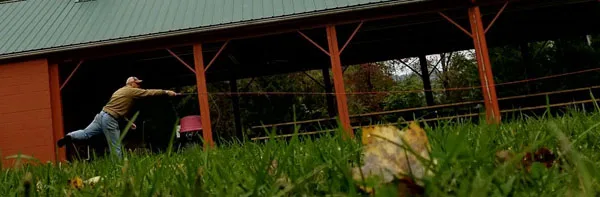
Line Launch with Lots of Acceleration with Medium Action Rod
How Social Media Spreads Misinformation
Many have missed this understanding of direct line speed increase and instead follow false claims. Just look at YouTube for the amount of misinformation—such as tying off the end of the line to a flagpole to illustrate deeper rod bend. Hauling with only your hands instantly disproves this! Other misconceptions claim that a small pull of the line produces big results, or that it's only needed at the very end of the casting stroke. These types of videos feed confusion to everyone from newbies to experienced anglers.
The real goal is to establish as much line speed as possible with the haul for greater distances. It's most easily taught by matching the rate of your haul with the rate of rod loading during the casting stroke. If you want really long casts, haul as long as possible but save a late wrist flick for even greater speed. The rate change in speed should be explosive toward the end. One of the most common questions I hear is how to throw farther. Typically, I reply with a question: How well do you throw short distances? Master short casts first—focus on loop control, effort, timing, and more until your technique is nearly perfect.
Synergy and Fly Casting